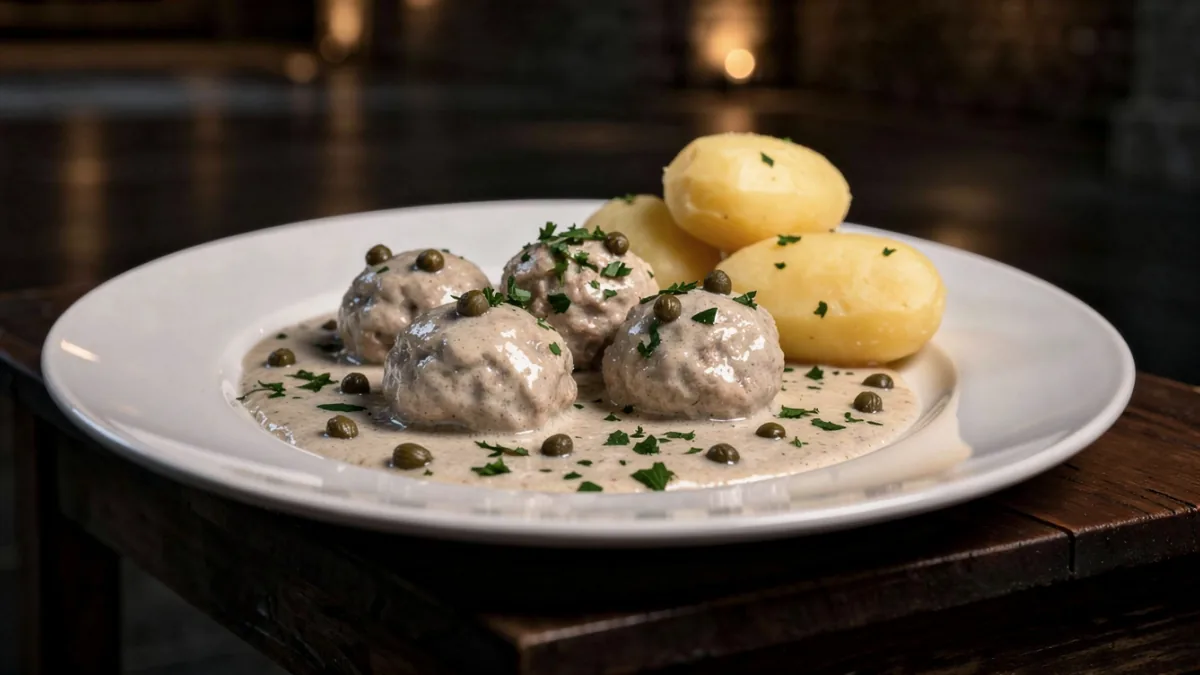
Preparation
- Tear up the bread roll and soak it in water or milk for 5 to 10 minutes, then squeeze it out well.
- Knead both kinds of mince with the onion, eggs, chopped anchovies, bread roll, marjoram, nutmeg, salt and pepper into an even mixture; if it is too soft, work in breadcrumbs a tablespoon at a time.
- With wet hands, shape the mixture into Klopse of about 50 g each (this makes about 14).
- Bring the stock to the boil with the chopped onion, bay leaf, allspice and peppercorns, reduce the heat and add the Klopse. They should only barely simmer, not boil rapidly. After 10 minutes, fish out the bay leaf and spices and let the Klopse cook gently for another 10 minutes.
- Remove the Klopse and keep them warm, covered. Strain the stock and measure out 375 ml for the sauce.
- Melt the butter in a pan, stir in the flour and cook briefly. Gradually pour in the measured stock, whisking, until a smooth, velvety sauce forms.
- Stir in the capers and cream; do not let it boil from now on. Season with lemon juice, sugar, salt and pepper to a sweet-and-sour balance.
- Whisk the egg yolk with 4 to 5 tbsp of the hot sauce and stir it into the sauce to make it smooth and glossy. Place the Klopse in the sauce, sprinkle with parsley and serve with boiled potatoes.
Drink with it
White wine · excellent match
Dry Riesling or Silvaner
The fresh acidity meets the lemon and capers and keeps the sauce, bound with cream and egg yolk, feeling light.
Which wine pairs with food? A simple approach to choosingPale lager · good match
Pilsner, well chilled
Hop bitterness and carbonation loosen the creamy sauce, while the lean malt leaves the capers in front.
Pils or Helles: What's the Difference?Sparkling wine · good match
Sekt or Crémant, brut
Bubbles and acidity clear cream and butter from the palate, and the yeasty note suits the pale roux.
Sparkling wine, Champagne, and Prosecco: what's the difference?London dry gin · good match
Gin and tonic with a twist of lemon zest, plenty of ice
Juniper and citrus pick up the tangy caper sauce, and the bitterness of the tonic cuts through the cream.
London Dry Gin: does it have to come from London?