Preparation
- Rinse the rice in a sieve under running water until the excess starch is washed away. Put it in a pan with the water, bring to the boil covered, simmer over medium-low heat for 10 minutes, then take off the heat and leave covered for 15 minutes.
- Stir together the rice vinegar, sugar and salt and gently fold it through the hot rice. Set aside covered until just lukewarm.
- Cut the salmon into 1 to 2 cm cubes with a very sharp knife; it is easier to cut if briefly chilled in the freezer.
- Gently combine the salmon with the sweet onion, spring onion, soy sauce, sesame oil, rice vinegar, salt and half of the sesame seeds, cover and marinate in the fridge for at least 1 hour; shorter if pressed for time.
- Slice the avocado, cucumber and nori.
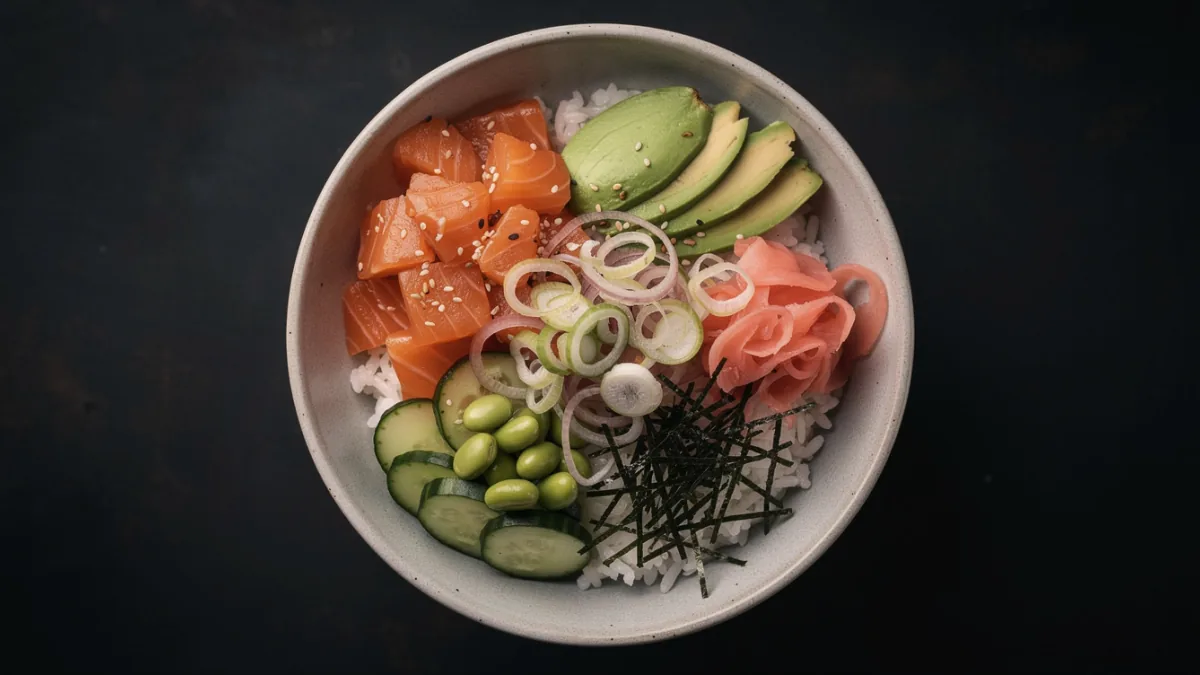
- Divide the rice among four bowls, spoon the marinated salmon on top and finish with avocado, cucumber, ginger, edamame, nori and the remaining sesame seeds.
- Eat straight away; the rice should not be hot so that the fish stays raw.
Drink with it
Junmai sake · excellent match
Junmai, well chilled
Its rice-like body and own umami meet the soy sauce and sushi rice, and the mild acidity keeps the raw salmon tasting fresh.
Junmai, Ginjo, Daiginjo: What do these mean for sake?White wine · excellent match
Dry Riesling or Grüner Veltliner
Crisp acidity cuts through the salmon fat and avocado, while the spicy fruit stands up to the soy salt and ginger.
Which wine pairs with food? A simple approach to choosingPale lager · good match
Japanese lager or Pils, ice cold
Carbonation and light bitterness wash sesame oil and soy salt from the palate.
Pils or Helles: What's the Difference?Sparkling wine · good match
Sekt or Crémant brut
Fine bubbles and acidity loosen the fat of the salmon and avocado without overpowering the marinade.
Sparkling wine, Champagne, and Prosecco: what's the difference?