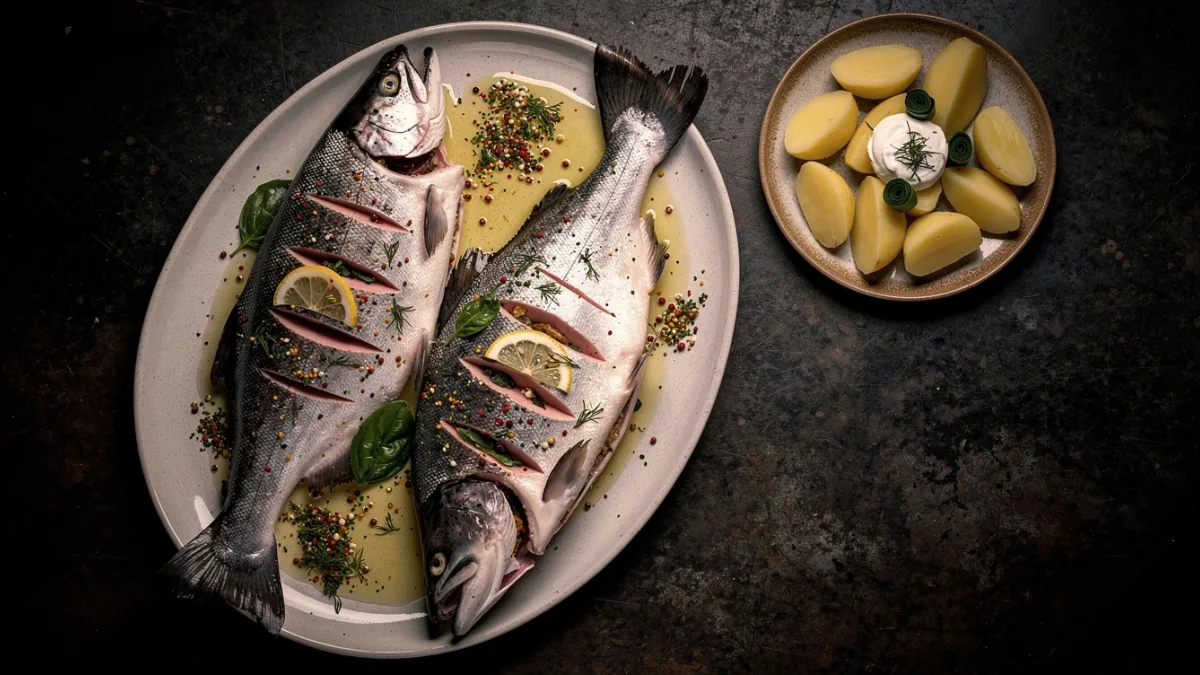
Preparation
- Preheat the oven to 200 °C conventional (top and bottom heat). Peel the potatoes, cut lengthways into quarters and boil in salted water for about 20 minutes. Season the soured cream with salt and pepper, chop the dill and melt the butter.
- Lay two long strips of aluminium foil side by side on a baking tray and brush the middle with olive oil. Rinse the trout briefly inside and out under cold water, drain and score three times across each side, then place on the foil and bend the edges up slightly.
- Season the fish sparingly with salt and pepper inside and out. Drizzle a little olive oil into each cavity and add three lemon slices and one or two sprigs of basil to each.
- Bake the trout uncovered for about 25 minutes. To test, cut into the flesh along the central bone: it should no longer be raw but still slightly translucent and juicy, and the dorsal fin should pull out easily.
- Stir the melted butter with the dill, lemon zest, lemon juice and mixed pepper. Drain the potato wedges and arrange on plates with the soured cream and chives.
- Serve the trout whole on a warmed platter and fillet at the table, drizzling over the dill lemon butter.
Drink with it
White wine · excellent match
Dry Riesling, Silvaner or Weißburgunder (Pinot Blanc)
Fresh acidity cuts through the dill lemon butter and soured cream, and the delicate fruit lets the tender trout shine.
Which wine pairs with food? A simple approach to choosingSparkling wine · good match
Crémant or Sekt brut
Fine bubbles and acidity keep butter and fish light and suit the lemon note.
Sparkling wine, Champagne, and Prosecco: what's the difference?Ginjo sake · good match
Ginjo, well chilled (8-10 °C)
Its floral fruit picks up dill and lemon without overpowering the mild fish.
Junmai, Ginjo, Daiginjo: What do these mean for sake?Pale lager · good match
Helles, well chilled
A soft malt body and little bitterness accompany butter and potatoes, and the carbonation refreshes.
Pils or Helles: What's the Difference?