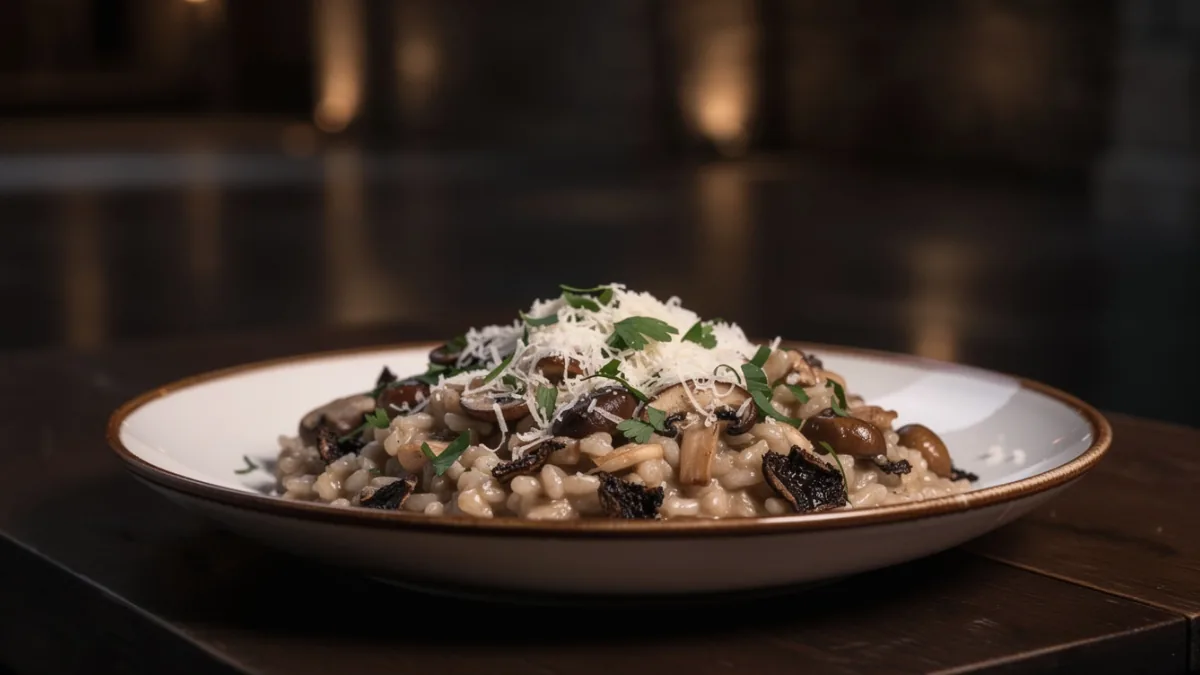
Preparation
- Pour 1 litre of boiling water over the porcini and soak for 20 minutes. Then drain, reserving the liquid, dissolve the stock cube in it and squeeze the mushrooms out lightly. Keep the stock hot.
- Heat the oil in a wide frying pan or shallow pot and soften the onion and garlic over medium heat for about 5 minutes.
- Add the chestnut mushrooms and the soaked porcini, season with salt and pepper and cook for about 8 minutes, until the fresh mushrooms are soft.
- Stir in the rice and fry for 1 minute, then pour in the wine and let it cook away completely.
- Add about a quarter of the mushroom stock and simmer, stirring often, until absorbed. Continue like this until the stock is used up and the rice is creamy and cooked; add a splash of water if needed.
- Take off the heat, stir in the butter, half of the Parmesan and some parsley, leave covered for a few minutes, stir again and serve with the remaining Parmesan and parsley.
Drink with it
Red wine · excellent match
Pinot Noir or Langhe Nebbiolo
Forest-floor and mushroom notes in the wine mirror the porcini, and the acidity cuts through butter and Parmesan.
Which wine pairs with food? A simple approach to choosingJunmai sake · excellent match
Junmai, at room temperature or lightly warmed
Rice with rice: the round, full umami of junmai strengthens porcini and Parmesan without clashing with the butter.
Junmai, Ginjo, Daiginjo: What do these mean for sake?White wine · good match
Lightly oaked Chardonnay or Arneis
Creamy richness and a fine oak note suit butter and Parmesan, and the acidity echoes the white wine cooked into the rice.
Fortified wine · good match
Dry Amontillado or Sercial Madeira, lightly chilled
The oxidative nuttiness links with the mushroom umami and Parmesan, and the acidity keeps the creamy rice fresh.
Port wine: understanding Ruby, Tawny, and Vintage
Why it pairs well
Amontillado and junmai are not standard pairings, but their nuttiness and umami pick up the mushroom aroma.