Preparation
- For the teriyaki sauce, stir the soy sauce, sake, mirin and sugar until the sugar has dissolved; gentle warming helps.
- Rinse the salmon fillets and pat dry. Season on both sides with salt and pepper, dust thinly with flour and tap off the excess.
- Heat the oil and butter in a large frying pan over a medium heat, taking care not to let the butter burn. Press each fillet skin side down onto the base of the pan for 15 seconds, then fry skin side down until the underside is golden brown after about 3 minutes; in two batches if needed.
- Turn the fillets, add 2 tbsp sake, put the lid on and steam over a low heat for 3 to 5 minutes. If the sake has evaporated and the fish is not yet cooked, add another splash of sake.
- The salmon is ready when it reaches about 52 to 54 °C at the thickest point and is still slightly translucent inside. Transfer the fillets to a plate.
- Pour the teriyaki sauce into the pan, turn up the heat a little and bring to the boil. Return the salmon to the pan, spoon the sauce over and turn off the heat as soon as it thickens.
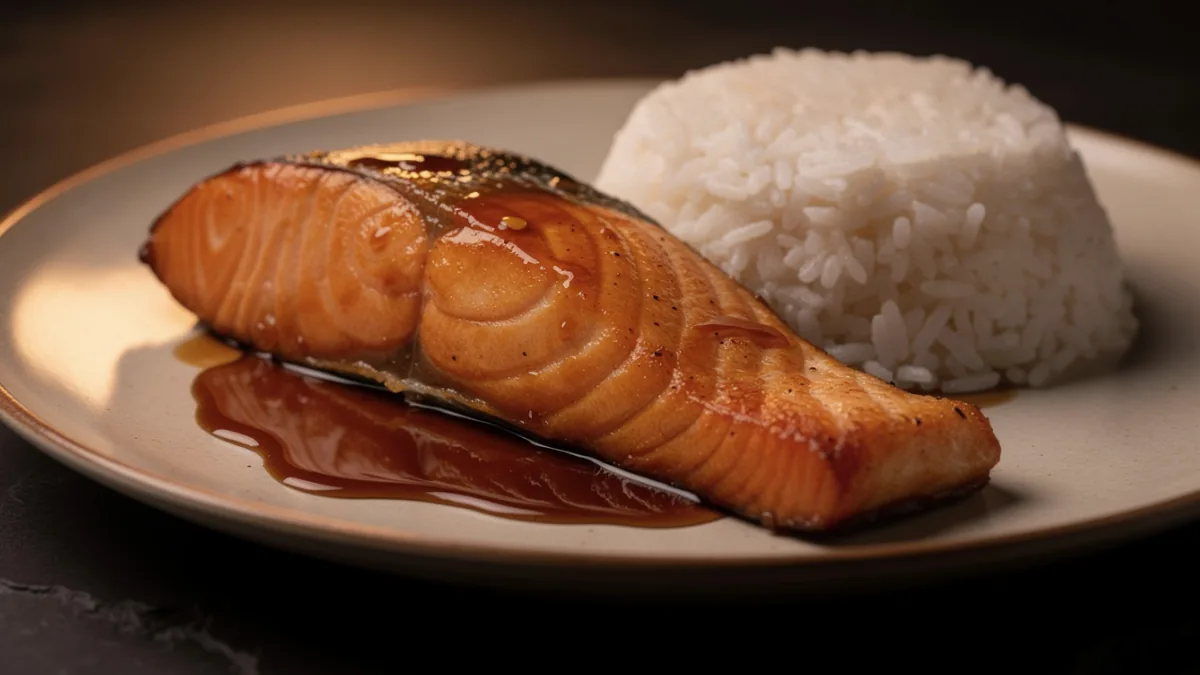
- Drizzle the salmon with the sauce and serve immediately with rice.
Drink with it
Junmai sake · excellent match
Junmai, chilled or lightly warmed
The rice character and umami of the junmai connect with the soy sauce and mirin, and the mild acidity takes the fat off the salmon.
Junmai, Ginjo, Daiginjo: What do these mean for sake?Red wine · excellent match
Pinot Noir or Spätburgunder, lightly chilled
Fatty salmon carries the red fruit and soft tannins, and the sweet-salty glaze lets the fruit of the wine stand out.
Which wine pairs with food? A simple approach to choosingWhite wine · good match
Riesling Kabinett, feinherb
Residual sweetness picks up the sweetness of the glaze, and the acidity cuts through the salmon fat.
Pale lager · good match
Japanese lager, ice cold
Carbonation and slim malt refresh after the sticky glaze.
Pils or Helles: What's the Difference?Mellow whisky · good match
Mild Japanese whisky as a highball with soda and ice
The light highball carries the glaze without fighting the fish, and the carbonation cuts the fat.
Whisky with food: cheese, chocolate, and savory dishes
Why it pairs well
Red wine with fish is a surprise; the fatty salmon and the sweet-salty soy glaze carry a low-tannin Pinot Noir better than many white wines.