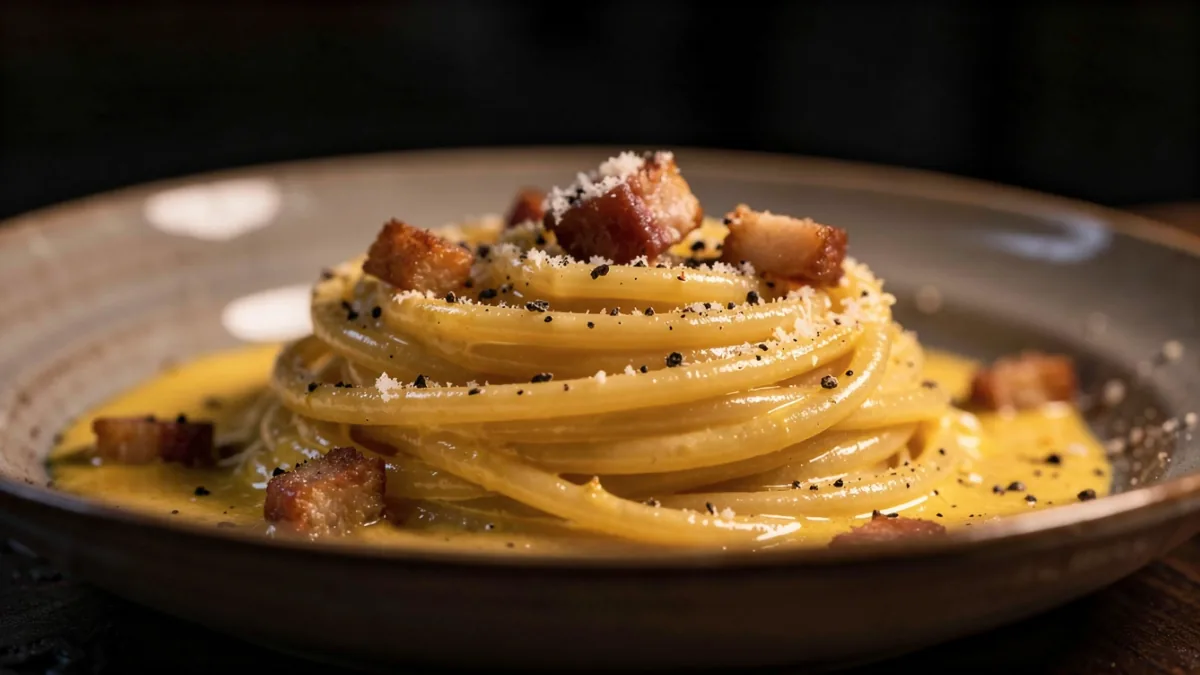
Preparation
- Cut the rind off the guanciale and cut the meat into 0.5 to 1 cm cubes; put plenty of water on to boil for the pasta.
- Render the cubes slowly with no added fat in a large cold frying pan over low to medium heat until golden and crisp, then set the pan aside.
- Whisk the eggs, egg yolks, both cheeses and plenty of pepper in a bowl until smooth.
- Salt the water and cook the spaghetti al dente according to the packet instructions; shortly before the end of the cooking time, scoop out about 100 ml of pasta water.
- Gently warm the pan with the bacon, add the pasta straight from the water with tongs and add a few spoonfuls of pasta water.
- Take the pan off the heat, add the egg and cheese mixture and toss vigorously until a creamy sauce forms; work only on the residual heat, otherwise the egg will curdle.
- If needed, add pasta water by the spoonful until the sauce is glossy and coats the pasta, and serve straight away with a little cheese and pepper.
Drink with it
White wine · excellent match
Frascati Superiore or Verdicchio, dry
Fresh acidity and the fine almond bitterness cut through the egg yolk, pecorino and guanciale fat; Frascati comes from the area around Rome, like the dish.
Which wine pairs with food? A simple approach to choosingSparkling wine · excellent match
Franciacorta or Trento DOC, brut
Bubbles and firm acidity clear the palate after the rich, salty egg and cheese sauce, and the yeasty notes suit the pecorino.
Sparkling wine, Champagne, and Prosecco: what's the difference?Red wine · good match
Cesanese del Piglio or young Montepulciano d'Abruzzo
Juicy acidity and little tannin stand up to the bacon and pepper without clashing with the egg yolk.
Pale lager · good match
Italian pilsner, cold
Carbonation and fine hop bitterness cut the creaminess of the sauce and the saltiness of the cheese.
Pils or Helles: What's the Difference?