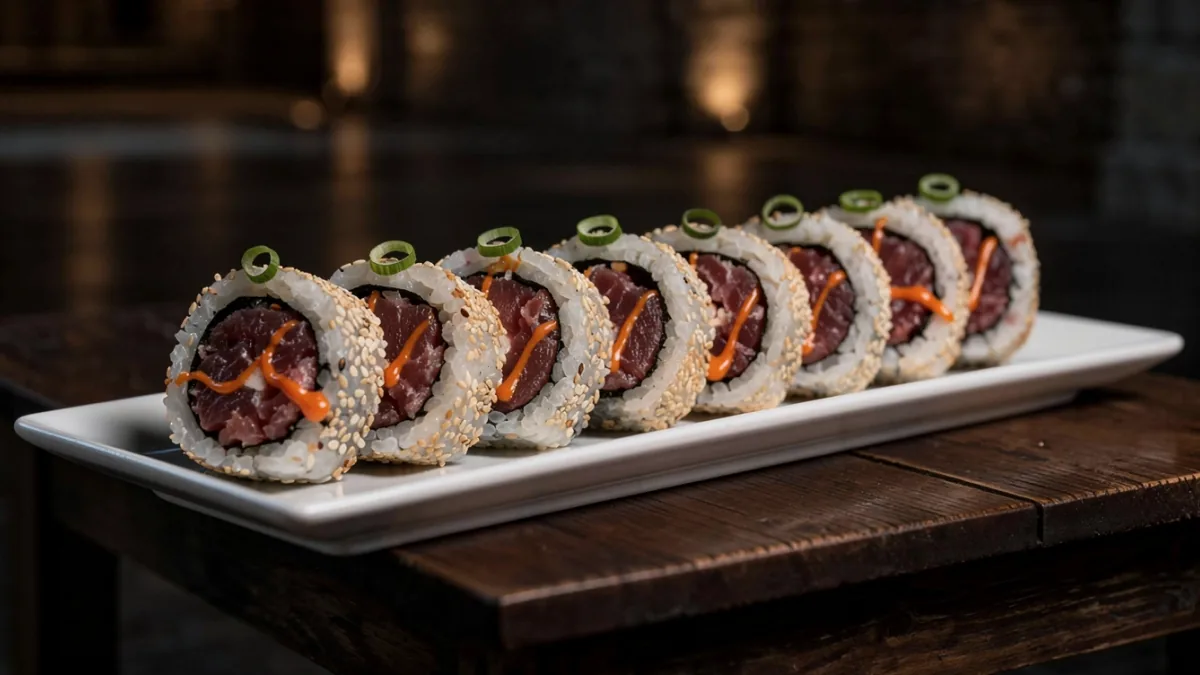
Preparation
- Cook the sushi rice according to the packet instructions. While still warm, mix with the seasoned rice vinegar and leave to cool to room temperature, fanning and stirring.
- Cut the tuna into cubes of about 5 mm and mix with the mayonnaise, sriracha, sesame oil and most of the spring onions.
- Wrap the bamboo mat in cling film and lay half a nori sheet on it, rough side up. Wet your fingers in the vinegar water, spread a quarter of the rice evenly over the nori without pressing it down, and sprinkle with sesame seeds.
- Turn the sheet over so the rice lies on the film. Lay a quarter of the tuna mixture as a narrow line along the bottom edge of the nori, roll tightly around the filling with the mat and gently press the roll as you continue rolling.
- Do the same with the other three nori halves. Cut each roll into 6 pieces with a sharp knife, wiping it on a damp cloth between cuts, sprinkle with the remaining spring onions and eat on the same day.
Drink with it
Ginjo sake · excellent match
Junmai Ginjo, well chilled
The classic partner for sushi: delicate fruit and a soft rice note carry the rich tuna, and the gentle acidity holds up against the mayonnaise and rice vinegar.
Junmai, Ginjo, Daiginjo: What do these mean for sake?Sparkling wine · excellent match
Champagne or Crémant, brut
Bubbles and crisp acidity lift the mayonnaise fat from the palate, and the yeasty note meets nori and toasted sesame.
Sparkling wine, Champagne, and Prosecco: what's the difference?White wine · good match
Riesling Kabinett, feinherb (off-dry)
A touch of residual sugar tames the sriracha, and the acidity refreshes after the rich fish.
Which wine pairs with food? A simple approach to choosingPale lager · good match
Japanese lager, ice cold
A slim body and carbonation wash away mayonnaise and sesame oil without covering the fish.
Pils or Helles: What's the Difference?