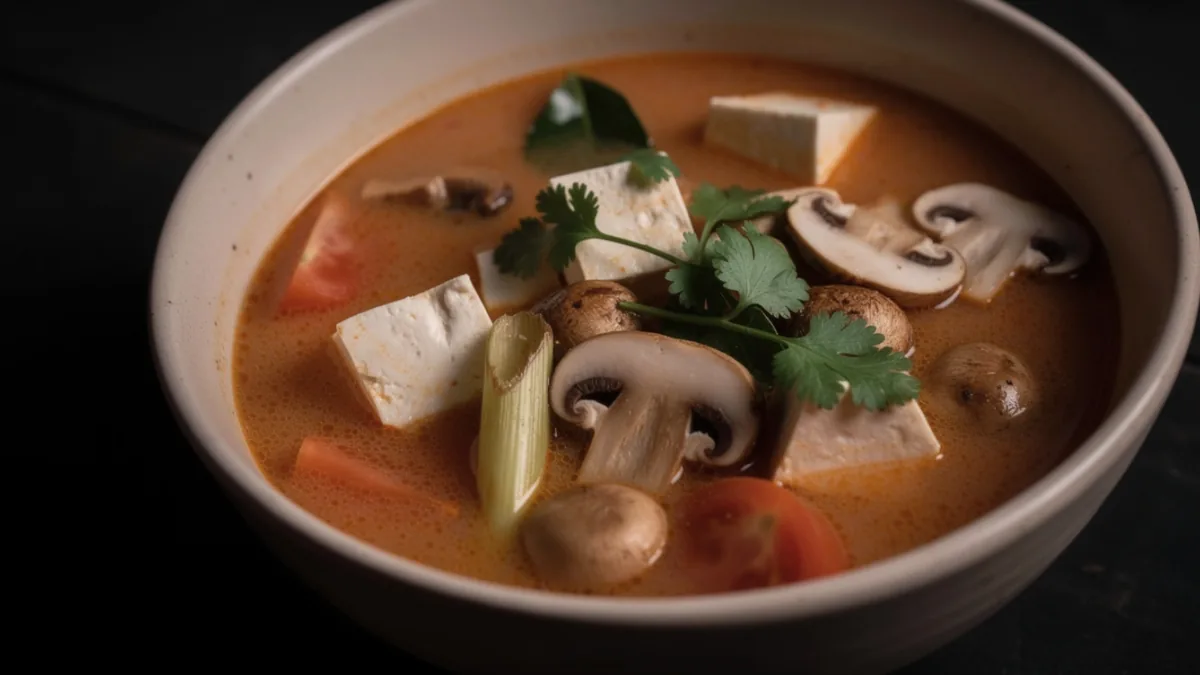
Preparation
- Cut off the top third and the bottom end of the lemongrass, bruise the stalks with the flat side of a knife and cut each into 4 pieces.
- Grind the chillies, garlic and galangal to a paste in a mortar.
- Heat the coconut oil in a large pot over medium heat, let the lemongrass release its fragrance for 3 to 4 minutes, then add the paste and fry for another 3 to 4 minutes.
- Stir in the stock, tomato, lime leaves, coconut milk and soy sauce and bring to the boil. Cover and simmer over low heat for 20 minutes, until the broth has reduced slightly.
- Add the tofu and mushrooms and cook for about 5 minutes until the mushrooms are soft.
- Stir in the lime juice and agave syrup and season with salt. Serve sprinkled with coriander; the lemongrass and lime leaves only add flavour and are not eaten.
Drink with it
White wine · excellent match
Riesling Kabinett feinherb (off-dry) or semi-dry Spätlese
The delicate residual sugar tames the chilli, the acidity keeps pace with the lime and tomato, and the citrus fruit of the Riesling meets the lemongrass.
Which wine pairs with food? A simple approach to choosingPale lager · excellent match
Thai lager or Helles, ice cold
The cold and the fizz wash the heat from the palate, and the lean malt stays out of the way of the sour, spicy broth.
Pils or Helles: What's the Difference?Floral gin · excellent match
Floral gin as a long highball with tonic, cucumber and plenty of ice
Lemongrass, galangal and kaffir lime are the same aromatic compounds that floral gins carry as botanicals; ice and tonic keep the drink long, whereas neat the alcohol would stoke the chilli.
Gin styles: London Dry, Old Tom, Navy Strength, and moreGinjo sake · good match
Ginjo sake, well chilled
Fruity, floral notes pick up the lime and herbs; low in alcohol and well chilled, it hardly fuels the chilli.
Junmai, Ginjo, Daiginjo: What do these mean for sake?