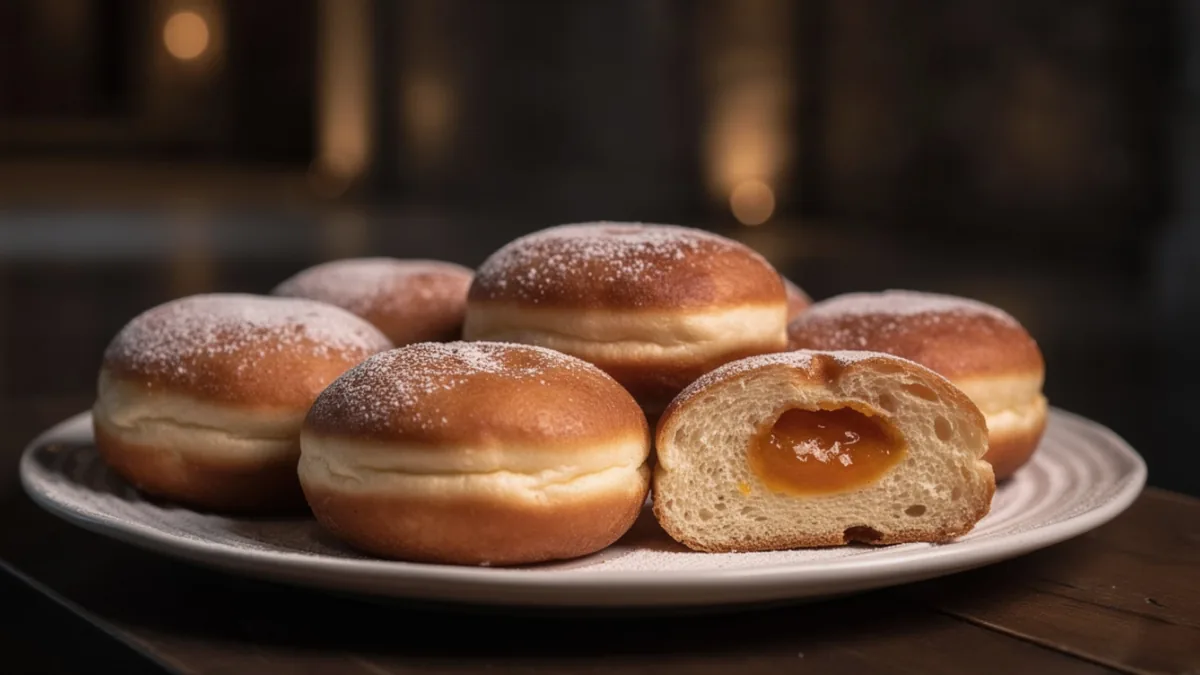
Preparation
- Using the dough hooks, work the milk, crumbled yeast, flour, sugar, egg yolks, butter, vanilla sugar, lemon zest, salt and rum for 5 minutes into a soft, smooth dough.
- Put the dough in an oiled bowl, cover with a damp cloth and leave to rise for about 40 minutes at room temperature; do not put it anywhere too warm.
- Divide into pieces of 50 to 60 g each (makes about 10), shape into smooth balls on a floured surface and flatten slightly.
- Set the balls on a floured tea towel, dust thinly with flour, cover with a damp cloth and leave to rise for another 20 minutes.
- Heat the oil in a pot to 170 °C. Place the doughnuts in the oil rounded side down, put on the lid and fry for 3 to 4 minutes.
- Turn and fry without the lid for about 3 more minutes until golden brown, then drain on baking paper.
- Fill a piping bag fitted with a long nozzle with the jam, pipe it into the doughnuts from the side and dust with icing sugar just before serving.
Drink with it
Sparkling wine · excellent match
Austrian Sekt, off-dry or brut
Doughnuts and Sekt go together at Viennese carnival: bubbles and acidity cut through the frying fat, and the acidity answers the apricot jam.
Sparkling wine, Champagne, and Prosecco: what's the difference?Sweet wine · good match
Welschriesling Beerenauslese, well chilled
The fruit acidity carries the sweetness of the filling and sugar, while apricot and honey notes pick up the apricot.
Which wine goes with dessert? Comparing sweetness deliberatelyFruit brandy · good match
Wachau apricot brandy (Marillenbrand), small, at room temperature and neat
The apricot aroma of the brandy doubles the filling, and the dry alcohol rounds off the rich pastry.
What is Calvados? Apple brandy with origin