Molasses Next Door
Sugarcane & Molasses
What is Bundaberg Rum made from? From molasses, the dark syrup left over once the sugar has crystallized out of the cane juice. Fresh sugarcane juice, as used for rhum agricole, never goes into the fermentation tank here.
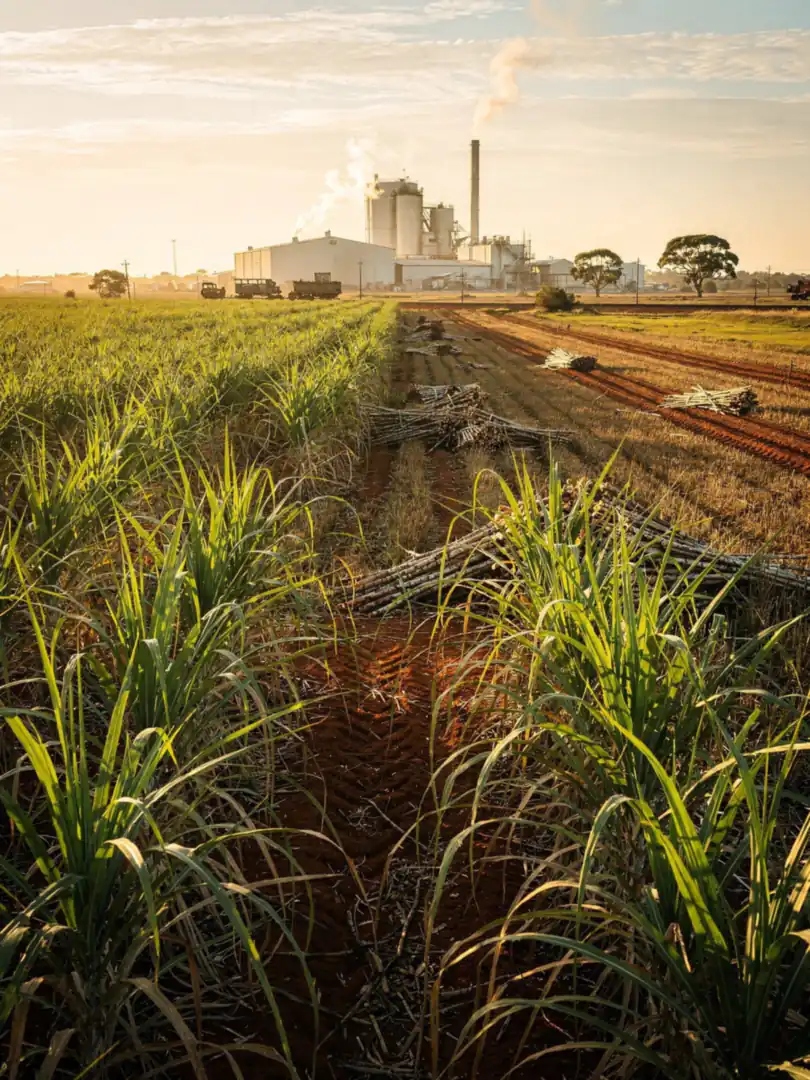
The molasses travels only a short distance. According to the distillery, it's pumped directly into the distillery through underground pipes from the neighboring sugar mill. The Bundaberg district once had several mills: Fairymead, founded in 1879 by the Young family, is considered the area's first major raw sugar mill and closed in 2005. Bingera, on the Burnett River since 1885, ceased operations in 2020. Today, Millaquin is the only mill left in the district, located on the river's southern bank, and it processes all the region's cane.
The cane grows on the warm coastal plain around the town, in a subtropical climate with hot, humid summers. The harvest season, known in English as the "crushing season," begins in Queensland around the middle of the year and ends toward year's end; harvesting today is done mostly by machine.
This makes a real difference to the flavor. Besides residual sugar, molasses contains minerals and dark color and flavor compounds from the evaporation process, whereas a juice-based spirit tastes grassier and lighter. Under EU law, molasses from cane sugar is a permitted rum raw material, as are syrup and juice; beet molasses doesn't qualify—no rum can be made from it.
Before the molasses can ferment, it's clarified: it's diluted with water and dunder, the residue left over from distillation, and heated so that unwanted substances settle out as sludge. That's how the distillery describes the process.
From the planters' point of view, molasses was long seen as a waste problem. With the distillery founded in 1888, it found a buyer right on its doorstep, and the region's sugar industry suddenly had a second source of income alongside raw sugar. That's why this rum remains so closely tied to the cane fields.