Yeast in a Test Tube
Fermentation
What yeast is used to ferment Bundaberg Rum? One that the distillery cultivates itself in a lab. According to the company, it comes from an in-house strain of Saccharomyces cerevisiae, the same species used to make bread and beer.
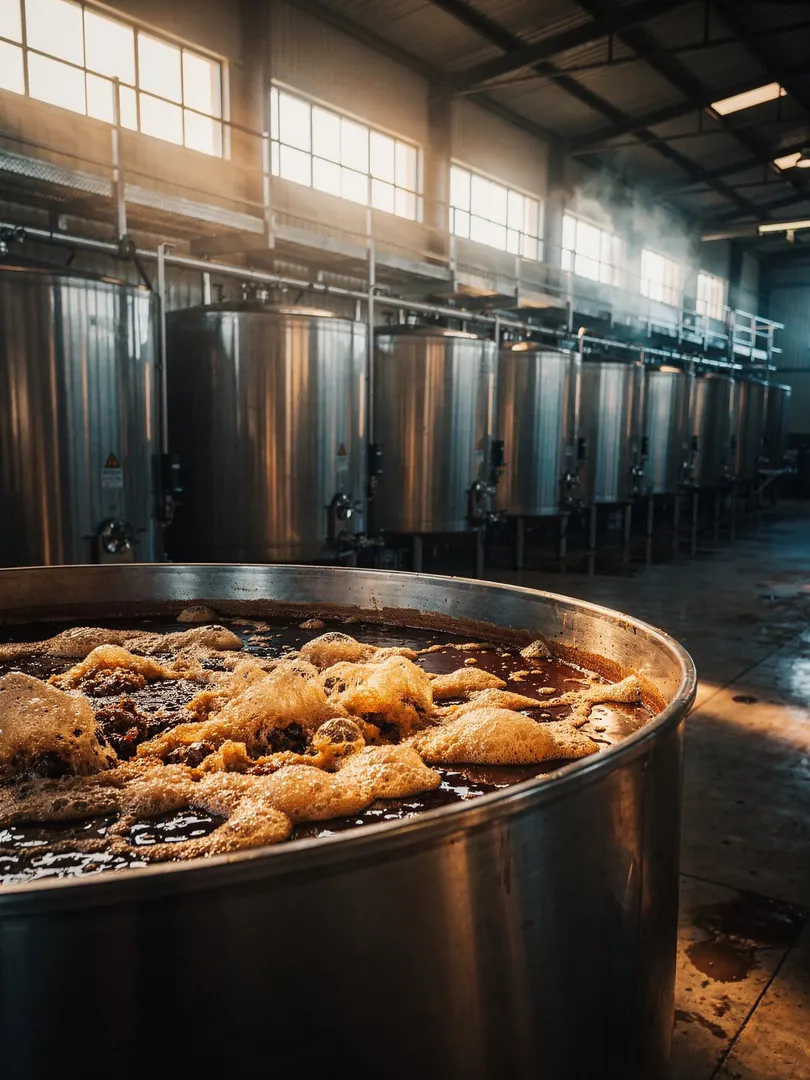
Every day, the culture is freshly prepared from a test tube and propagated in several stages under controlled conditions before going into the stainless steel fermentation tanks. The advantage of such a pure culture lies in its consistency: the yeast delivers the same flavor compounds batch after batch, and the taste barely varies, unlike it would with wild yeasts from the air.
According to the producer, fermentation takes around 36 hours. That's short: some distilleries let their mash work for up to nine or ten days, and generally, the longer the yeast and other microbes have time, the more esters and bold flavors develop.
Esters are aromatic compounds formed when acids and alcohol combine; they smell of fruit or flowers. With short fermentation, fewer of them form. This is likely one reason why Bundaberg Rum tastes more of molasses, caramel, and wood than of ripe fruit.
After the 36 hours, the fermented mash, known in English as "wash," is pumped into the still house. At that point it contains a few percent alcohol, since the yeast has converted most of the sugar into alcohol and carbon dioxide. The dunder from distillation is reused: as the distillery describes it, it's used to dilute the fresh molasses. It's acidic, which steers fermentation in the desired direction.
Stainless steel can be cleaned thoroughly and doesn't impart anything to the mash, whereas wooden vats introduce their own microbes that shape the flavor. Choosing stainless steel means a fermentation that can be controlled precisely.