The Word Rum
Region & History
Where does the word rum come from? The oldest evidence comes from Barbados: in 1651, planter Giles Silvester wrote that the island's main drink was called "Rumbullion, alias Kill-Divill." Even before 1654, the shorter "Rum" appears in records. The popular theories tracing it to the Latin saccharum or to a drinking glass called a "rummer" have no supporting evidence.
The most likely origin lies in Devonshire, home to many of the early settlers: there, "rumbullion" meant a great uproar or tumult. This is not proven, however. "Kill-Devil"—literally devil-killer—speaks to the reputation of the fierce young spirit. Richard Ligon, who lived on the island from 1647 to 1650, described the drink in 1657 as a product made from the scum skimmed off the sugar boiling kettles.
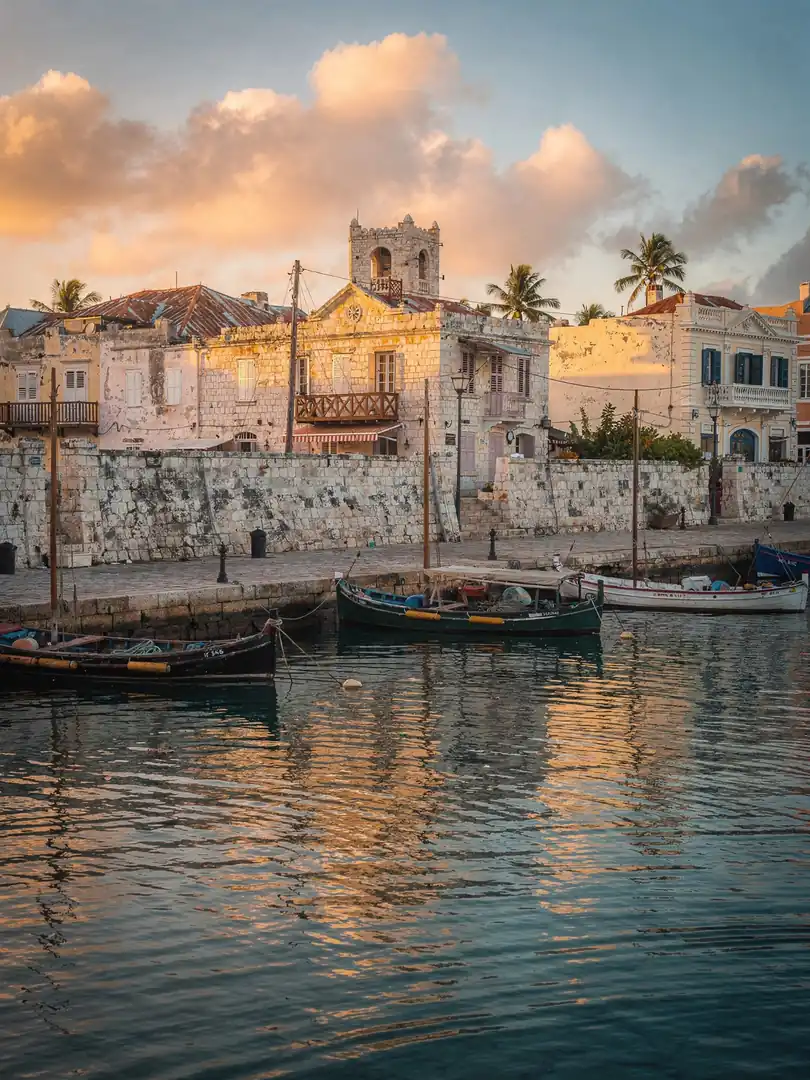
Bridgetown, today the capital in the southwest, was founded in 1628 as an English settlement. Its harbor, the Careenage, served as the trading hub for sugar, molasses, and rum. It was also the point of entry for the people forcibly brought from Africa to work the plantations. The 1834 law only formally ended slavery across the Empire—an apprenticeship system requiring continued labor for former owners lasted until 1838.
The Garrison south of the old town served as the headquarters for British army and naval forces in the eastern Caribbean. In 2011, UNESCO added "Historic Bridgetown and its Garrison" to its World Heritage list. Barbados gained independence on November 30, 1966.
Four distilleries define the island today: Foursquare, run by the Seale family; St Nicholas Abbey; the West Indies Rum Distillery in Bridgetown, owned by Maison Ferrand since 2017; and Mount Gay, whose visitor center welcomes guests in Bridgetown. There is as yet no protected designation of origin for rum from Barbados.