Kettles and Molasses
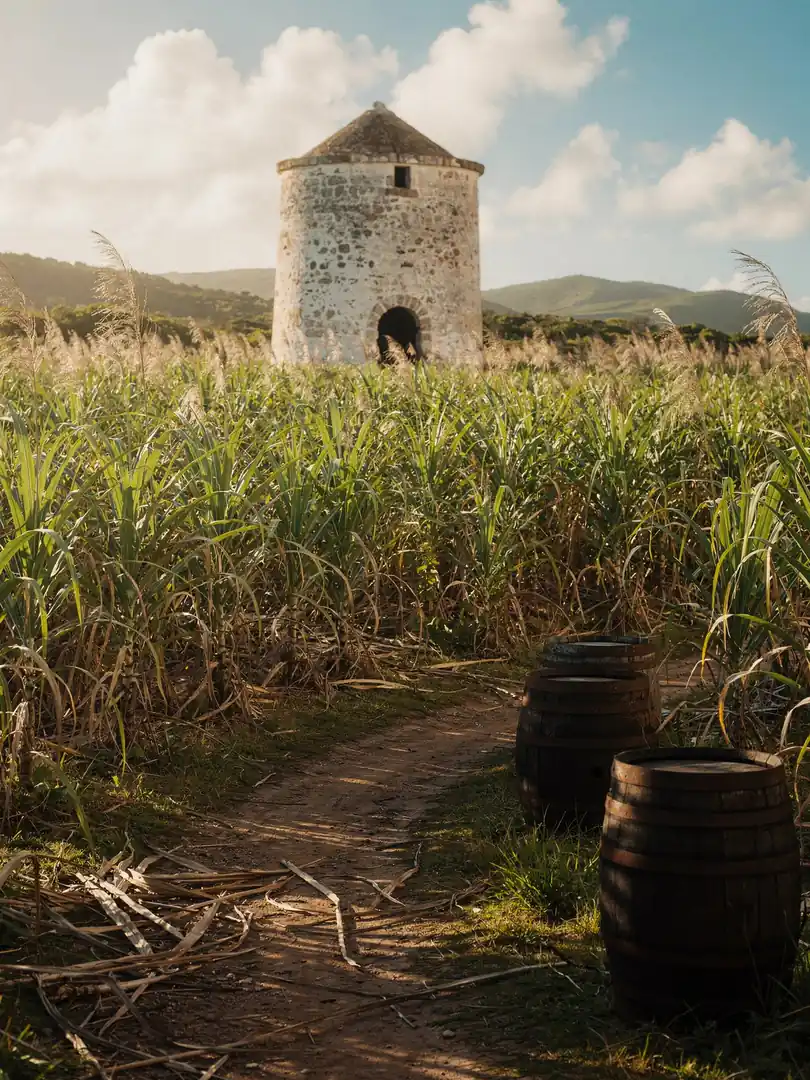
Sugarcane & Molasses
What is molasses, and why is rum distilled from it? When sugarcane juice is boiled down in copper kettles, the sugar crystallizes out, leaving behind a dark, viscous syrup that can no longer be refined into sugar. This is molasses. It smells of licorice and caramel, yet still contains enough sugar to ferment.
This very byproduct is what the earliest distillers on Barbados put to use. Sugar was the business; distilling was simply a way to make use of what remained. This origin explains why rum from Barbados has traditionally been molasses rum rather than cane-juice rum like the Rhum Agricole of the French Antilles, which ferments freshly pressed sugarcane juice.
The West Indies Rum Distillery in Bridgetown also works with molasses, which it purchases from outside sources. According to trade press reports, it comes mainly from Guyana, Barbados, and Mexico. The distillery sits by the sea at Brighton Beach, so the raw material arrives by way of the harbor.
Molasses has one advantage that fresh juice lacks: it keeps. Fresh sugarcane juice begins fermenting within hours, while molasses can be stored, shipped, and processed over many months. This is why rum became a trade commodity that crossed the Atlantic. Cane-juice rum, by contrast, must be distilled close to the field.
What about the sugar in finished rum? The sugar in molasses converts to alcohol during fermentation and doesn't remain in the distillate. A rum tastes sweet when sugar has been added after aging. The EU permits up to 20 grams per liter, and the amount need not appear on the label.