Twice Matured
Cask & Climate
How does Planteray rum from Barbados mature? According to Maison Ferrand, in two stages: the rum first ages in casks on Barbados, then undergoes a second maturation in France, in Cognac casks. This secondary aging is central to the brand's concept and sets it apart from rum matured entirely in its home country.
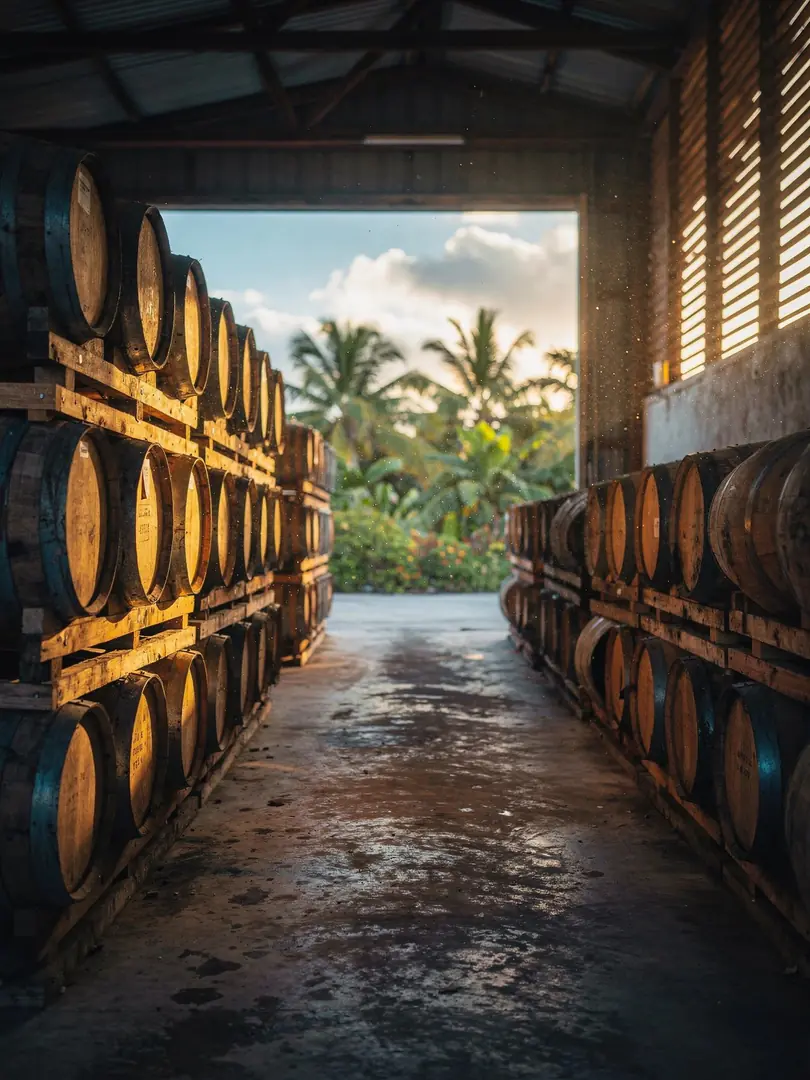
The first maturation takes place in a tropical climate. Warm air drives alcohol and water through the wood, and the rum quickly takes on the cask's color and aroma. The price for this is evaporation: the portion lost from the cask, the angel's share, runs many times higher in tropical warehouses than in Scotland—often around eight percent a year.
A rule of thumb often cited states: one year in the tropics equals three years in Europe. This comes from marketing and isn't chemically precise, since evaporation and wood interactions proceed at different rates.
In France's temperate climate, these processes slow down. The rum loses less volume, picks up notes from the Cognac cask, and becomes rounder. Which cask is used and for how long is up to the producer; there is no uniform regulation for this in rum production.
How old is a rum when a number appears on the label? In the EU, the age statement must refer to the youngest component in the blend. If it says ten years, even the youngest cask is at least ten years old, though older components may be included. This also applies to rum from Barbados, which has no protected designation of origin of its own.