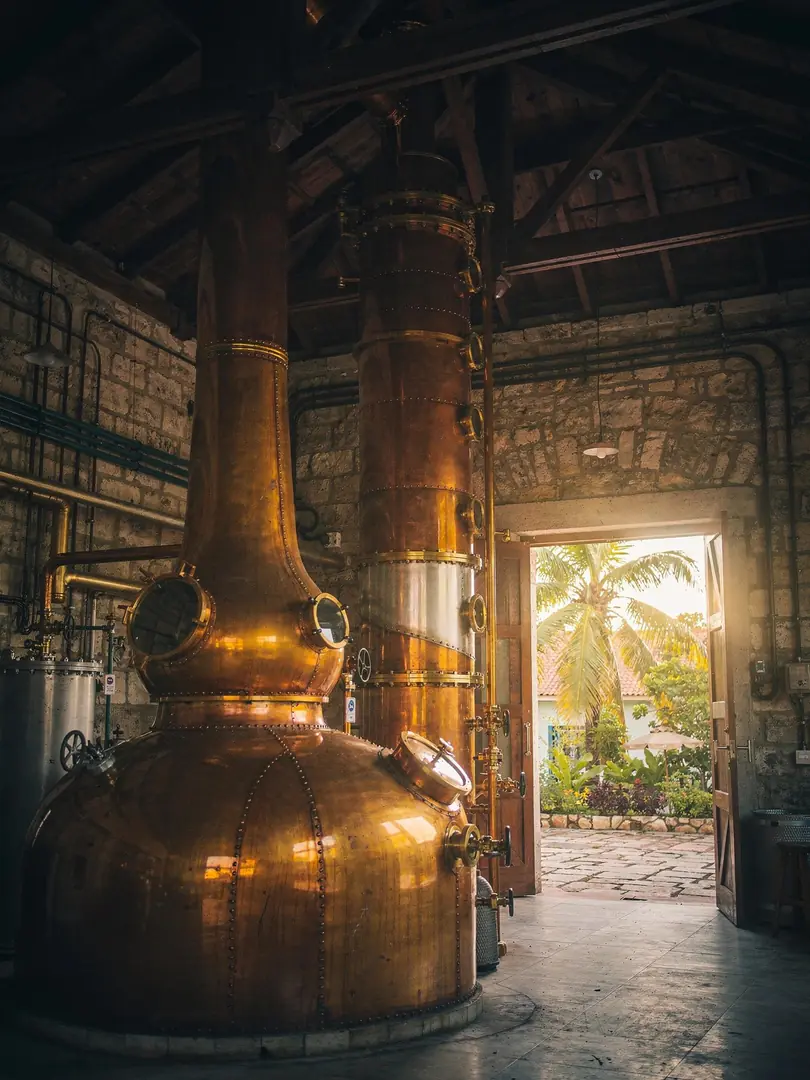
Column, Pot, Chamber
Distillation
Which stills does the West Indies Rum Distillery use? According to trade press reports, Brighton Beach houses three column stills, three pot stills, and one chamber still. That's an unusually broad setup for a single facility, and it allows for rums with very different characters.
A column still runs continuously: mash enters at the top, steam rises from below, and alcohol separates from water on the plates inside. The more plates, the lighter and purer the distillate. A pot still, by contrast, is a copper kettle filled batch by batch, yielding a heavier, more aromatic distillate. The Vulcan-type chamber still is reportedly, according to press coverage, the last of its kind still in operation.
The distillery was built in 1893 by German engineer George Stade as the West India Rum Refinery. For a long time it operated as a contract distillery: merchants and bottlers would order a specific profile, and the distillery supplied the distillate. Its first own-label brand, Stade's, didn't launch until 2021, according to trade press reports.
Since 2017, the house has belonged to Maison Ferrand. The French company had already been a customer since the early 2000s, sourcing rum here for its Plantation brand, which has been called Planteray since January 9, 2024. The name changed following debate over the word "plantation," which since 2020 has, for many, come to evoke the forced labor on sugar plantations.
What makes the facility special is its range of options. A master distiller can produce light column distillates and heavier pot-still distillates side by side, then blend them into a profile tailored exactly to the brand in question.