Warm and Fast
Fermentation
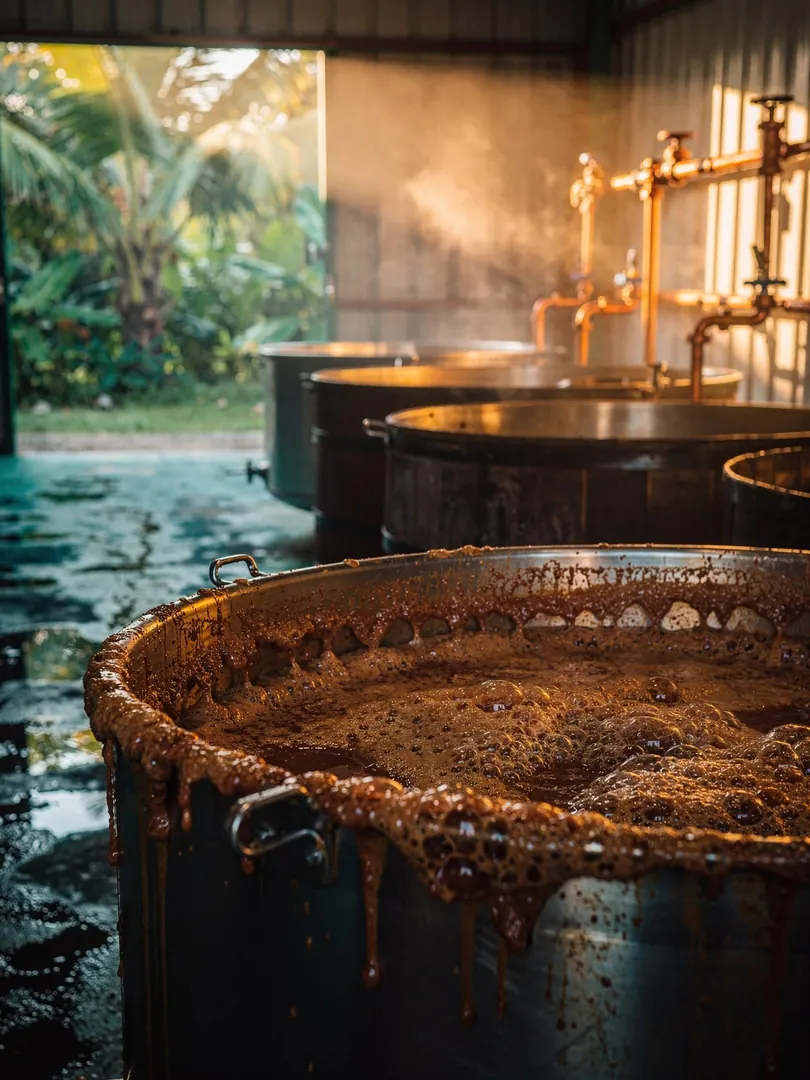
In the vats of a fermentation house, the air smells of yeasty dough and ripe fruit, and bubbles rise through the mash. There, yeasts convert the sugar from molasses, juice, or syrup into alcohol and carbon dioxide. What's left is a thin, cloudy liquid with only a few percent alcohol, usually between five and nine.
Because it stays warm year-round on Barbados, fermentation proceeds quickly, and distilleries must keep a close eye on the temperature of their vats. If it gets too hot, the yeast dies off or produces unwanted flavors. Whether a fermentation house uses stainless steel or wood also makes a difference: stainless steel is easier to clean and cool, while wood gives microorganisms in the material a place to live.
Which yeast a house uses and how much time it gives the mash determines its signature. A shorter fermentation yields a lighter, cleaner spirit. A longer fermentation builds more esters, those fruity aromatic compounds reminiscent of banana, pear, or pineapple. Anyone comparing a rum from northern Barbados with a pot-still rum from Jamaica will notice the difference before the first sip: less glue and overripe fruit, more vanilla and baked goods.
The raw material colors the fermentation too. Besides sugar, molasses contains many minerals and residues from the boiling process that lend a bolder, darker flavor. Juice ferments cleaner and grassier, with syrup falling somewhere in between. Mount Gay works with molasses, St Nicholas Abbey with the juice or syrup of its own cane, and so the fermentation stage alone sets the two houses on different paths.