Yeast and Time
Fermentation
Molasses only becomes rum once yeast converts the sugar into alcohol. For this, the thick mass is diluted with water and yeast is added. The yeast also produces esters along the way, fruity aromatic compounds that can later smell like banana, pear or pineapple in the glass. How many of these form determines the character of the rum.
The Foursquare Rum Distillery in St. Philip works with its own yeast strain, originally from South Africa. Cultured yeast has an advantage: it delivers the same profile every time. Wild yeasts, which enter the vat from the air and the walls, bring more surprise and less consistency. Both approaches exist in the rum world.
Fermentation time acts like a dial. Let the mash work only briefly and you get a light, clean distillate. Weeks of fermentation bring acids and heavy esters, and with them bold aromas. Foursquare's rums turn out soft and round, not aimed at sharp fruitiness.
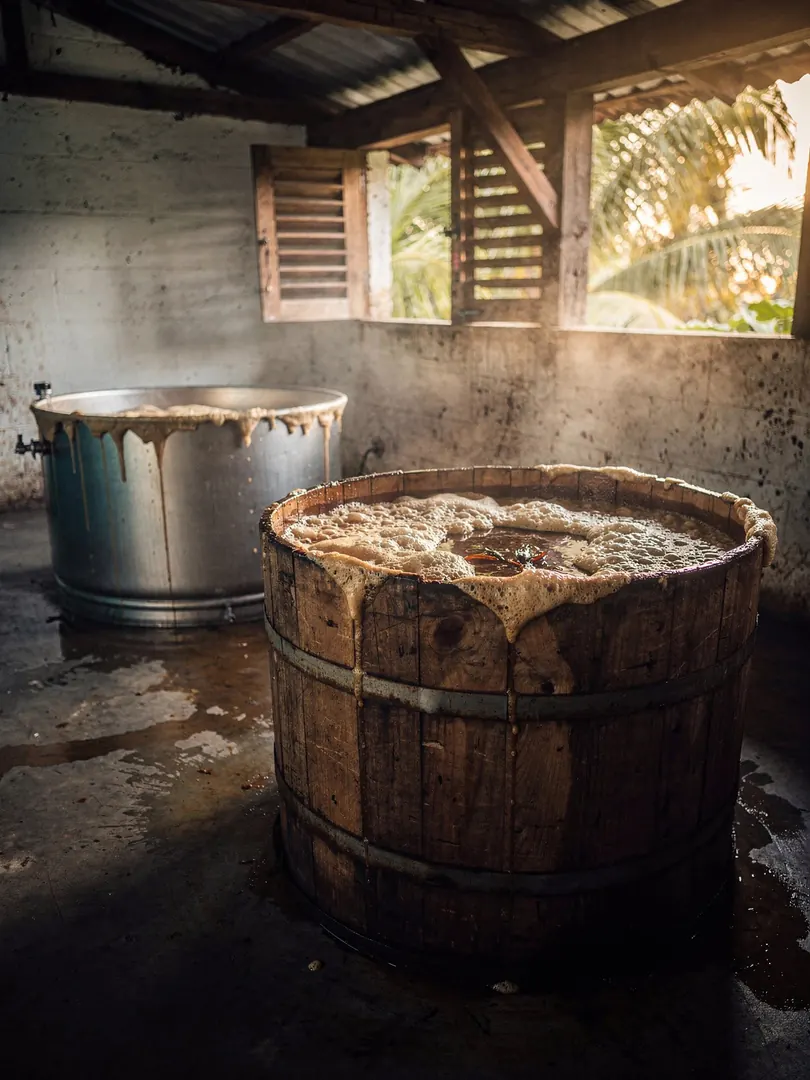
Temperature matters as much as the fermentation vessel itself. Fermentation generates heat, and in a tropical climate the yeast quickly comes under stress if the vat gets too hot. Wood holds heat longer and gives bacteria a place to hide, while stainless steel is easier to cool and clean. Both are used in the rum industry.
What remains at the end is a fermented liquid with a few percent alcohol by volume, called "wine" or "wash." It smells of bread and fresh fruit and still tastes thin. Only the still separates the alcohol and its aromas from the water and the heavy compounds.