Cane in the Southeast
Sugarcane & Molasses
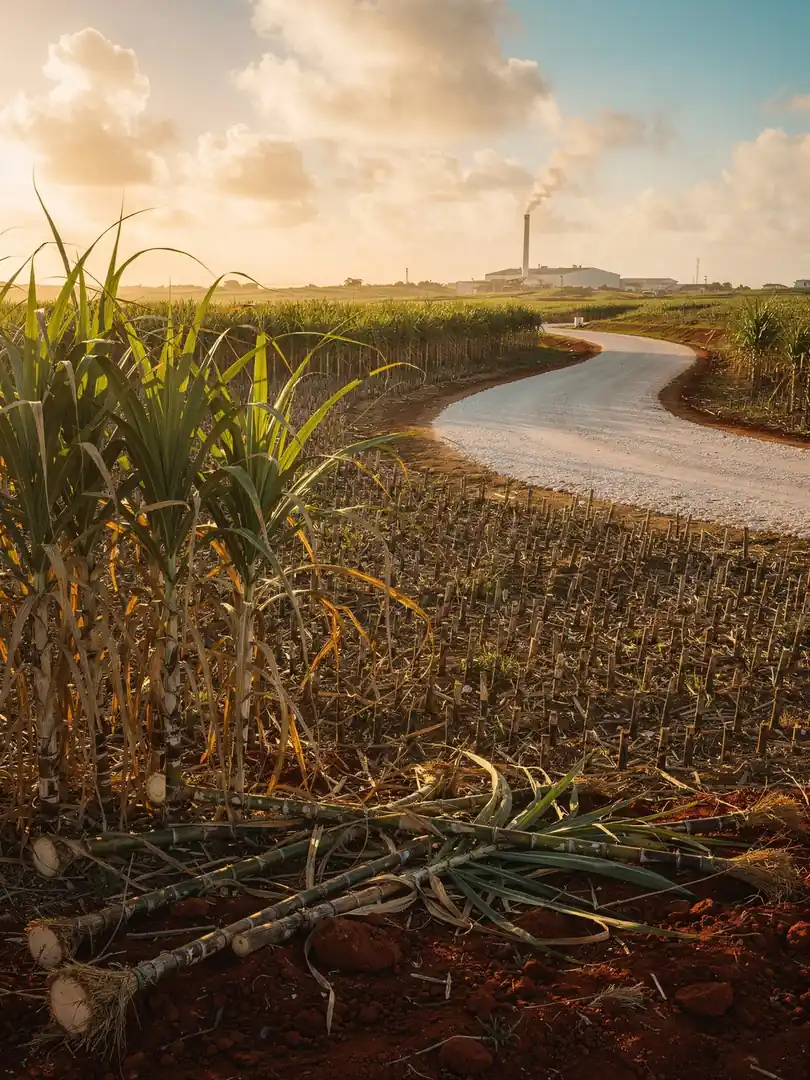
Where does the molasses for Barbados rum come from? Mostly from the island itself, from sugarcane grown in parishes like St. Philip. The southeast is relatively flat; standing at the Ragged Point lighthouse, built in 1875, you can see the land stretch to the horizon. The island sits on coral limestone, which lets rain drain away quickly, and sugarcane copes well with such soils.
Harvesting happens in the first half of the year. In 2025 the campaign ended in early June, with private growers delivering around 96,000 tons of cane. It's processed at the Portvale sugar factory in St. James, the island's only one. In 2025 it produced just over 8,000 tons of sugar, about 73 percent of the 11,000-ton target.
What's left once the sugar has crystallized out? Molasses, a dark, viscous residue that still contains fermentable sugar. The more thoroughly the factory extracts sugar, the less remains in the molasses, so no batch is quite like another. Foursquare distills from molasses, as do almost all distilleries on the island.
Cane juice is the freshly pressed juice of the plant and ferments within a few hours, so it has to be processed quickly. Syrup is made by thickening the juice. The EU permits all three raw materials for rum. If you want to know what cane-juice rum tastes like, look to the French Antilles, where it's known as rhum agricole.
Agriculture has also shaped Barbados through research: in the late 19th century, a British breeding station operated on the island, developing new cane varieties. Sugar has changed the island's landscape too. The fields and old windmill towers date from a time when almost everything revolved around this one crop.