Plantation Becomes Distillery
Region & History
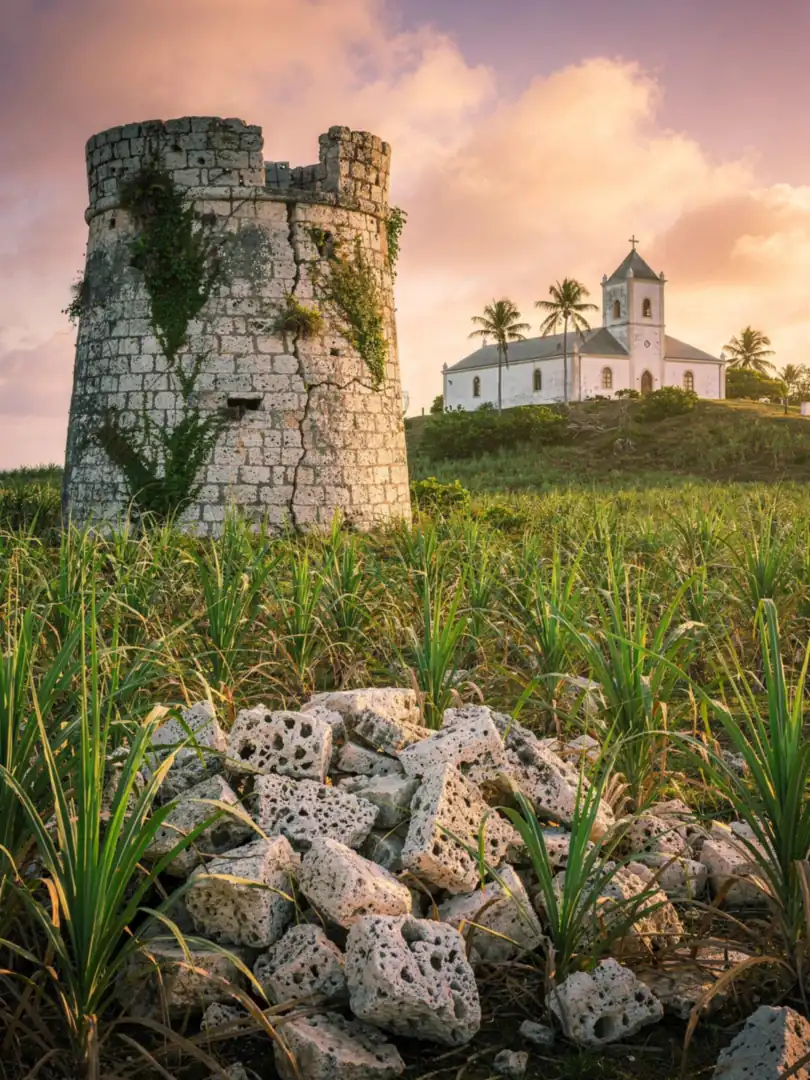
Where is Barbados rum distilled? Part of it is made in St. Philip, the largest of the island's eleven parishes, in the flat southeast. Wind blows constantly off the Atlantic, Crane Beach and Bottom Bay line the coast, and inland, sugarcane fields stretch right up to the village edges. In the middle of it all, the Foursquare Rum Distillery operates on the grounds of a former plantation.
Sugarcane has been grown and processed on plantations in Barbados since the 17th century. The work in the fields and mills was done by enslaved people who had been forcibly brought from Africa. Slavery in the British Empire ended by law in 1834, but until 1838 the freed people still had to work for their former owners during a transitional period. Foursquare once included a sugar factory that closed in the late 1980s and stood empty.
In 1995, the Seale family took over the abandoned site, and in 1996 rum production began there under Sir David Seale with purpose-built stills. Today his son Richard Seale runs the house as Master Distiller and Master Blender. On the grounds, Heritage Park displays historical equipment from the plantation era.
Is there a protected designation of origin for Barbados rum? Not yet. "Barbados Rum" doesn't appear in the EU register of geographical indications, and no such rule is in force on the island either. A 2019/20 draft comes from Mount Gay, Foursquare and St Nicholas Abbey, which together hold more than 90 percent of aged stocks. It requires maturation on Barbados and the use of Barbados water, but doesn't mandate a particular type of still.
The West Indies Rum Distillery in Bridgetown, owned by Maison Ferrand since 2017, objected because it also wanted to allow maturation abroad, for instance in France. Press reports from late 2025 describe the process as having been stalled for years. Richard Seale campaigns for the protection so that imported spirits can't put a Barbados flag on their label.