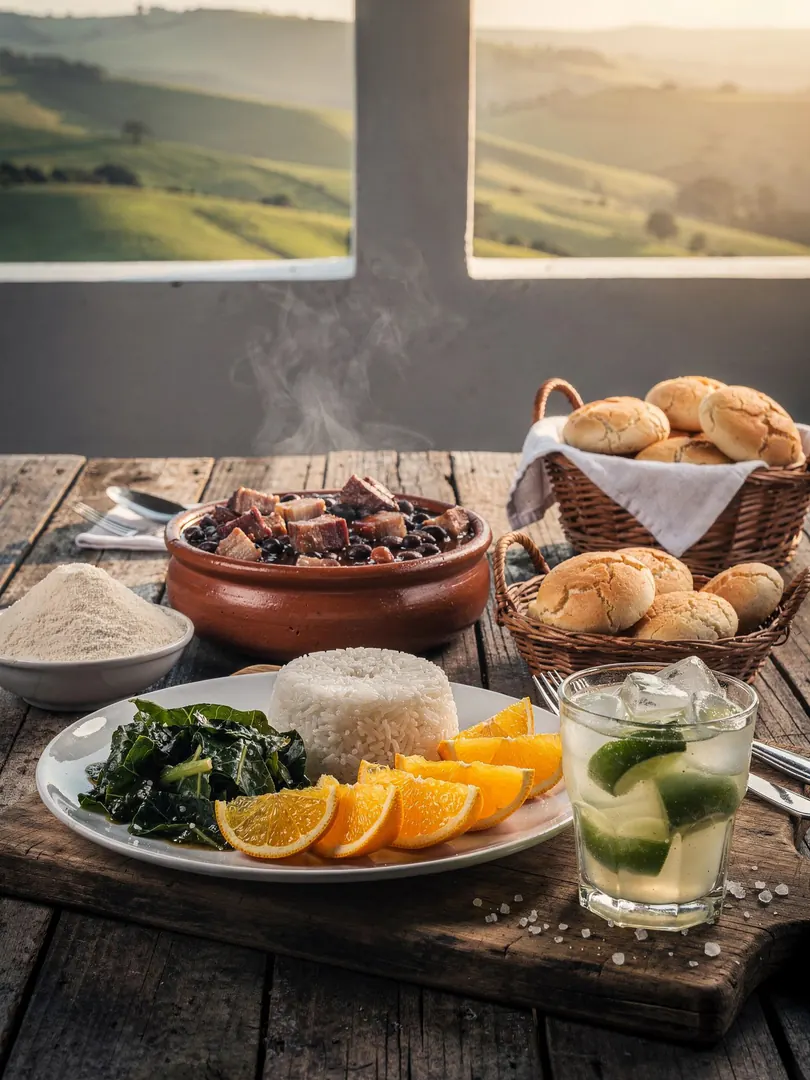
Caipirinha and feijoada
Food & Drinking Culture
Brazil's national drink is the Caipirinha. According to the International Bartenders Association's recipe, 60 milliliters of Cachaça are combined with a lime cut into pieces and four teaspoons of white cane sugar. Both are gently muddled in the glass, then crushed ice and the Cachaça are added. The name derives from caipira, the word for a country dweller.
Where the Caipirinha originated remains unclear. A common account points to the hinterland of São Paulo and the year 1918, though this isn't fully documented. The Tahiti lime is the common choice, which the IBA recipe calls the Persian lime. Made with vodka instead of Cachaça, the cocktail is called a Caipiroska; with rum, a Caipirissima. Anyone making one at home needs a feel for the sugar: more makes it milder, less lets the lime's acidity lead.
Feijoada belongs on the Brazilian table: a stew of black beans with pork and sausage, served with rice, collard greens, and orange slices. The stew is rich and salty; lime and the freshness of a young Cachaça provide the counterpoint. That's why a Caipirinha often sits alongside the feijoada.
Minas Gerais, home to Salinas, has its own cuisine: pão de queijo, small rolls made from cassava starch and cheese, and feijão tropeiro, with beans, cassava flour, and bacon. In the botecos, the simple local bars, the regional Cachaça is always on offer.
Besides the Caipirinha, there's the batida, a cocktail of Cachaça, fruit juice or coconut milk, and sugar. At the Festas Juninas, the June festivals, quentão is served, a hot drink made from Cachaça with ginger, sugar, and spices.
Among the rituals is a custom known from tradition: a first drop is poured onto the ground for the saints. In bars, the drink is often accompanied by tira-gosto, small bites such as fried cassava or cubes of cheese.