Neat or mixed
Tasting
What does Cachaça taste like neat? An unaged Cachaça smells of freshly pressed sugarcane, grass, and green banana, sometimes citrus peel; on the palate it feels light, with a short, slightly sharp finish. Aged expressions carry vanilla, cinnamon, or toasted nuts, while the sweetness of the cane recedes. Color tells you little: an envelhecida may have its hue adjusted with caramel coloring.
Avuá serves as an example of the wood-driven style: the brand, by its own account, bottles a Cachaça aged up to two years in Bálsamo wood, and a second version aged in Amburana. The wood turns the Bálsamo expression dark, almost burgundy, while the Amburana version is described as amber-colored and spice-forward. Anyone who only knows Caipirinha is in for a very different kind of Cachaça here.
Paraty and Salinas stand for origin. Salinas is home to, among others, the brand Havana from Anísio Santiago; Paraty is home to producers who bottle their Cachaça under the protected geographical indication. Which bottle you come across depends on the retailer; the label names the place and the distillery, and it's worth a closer look.
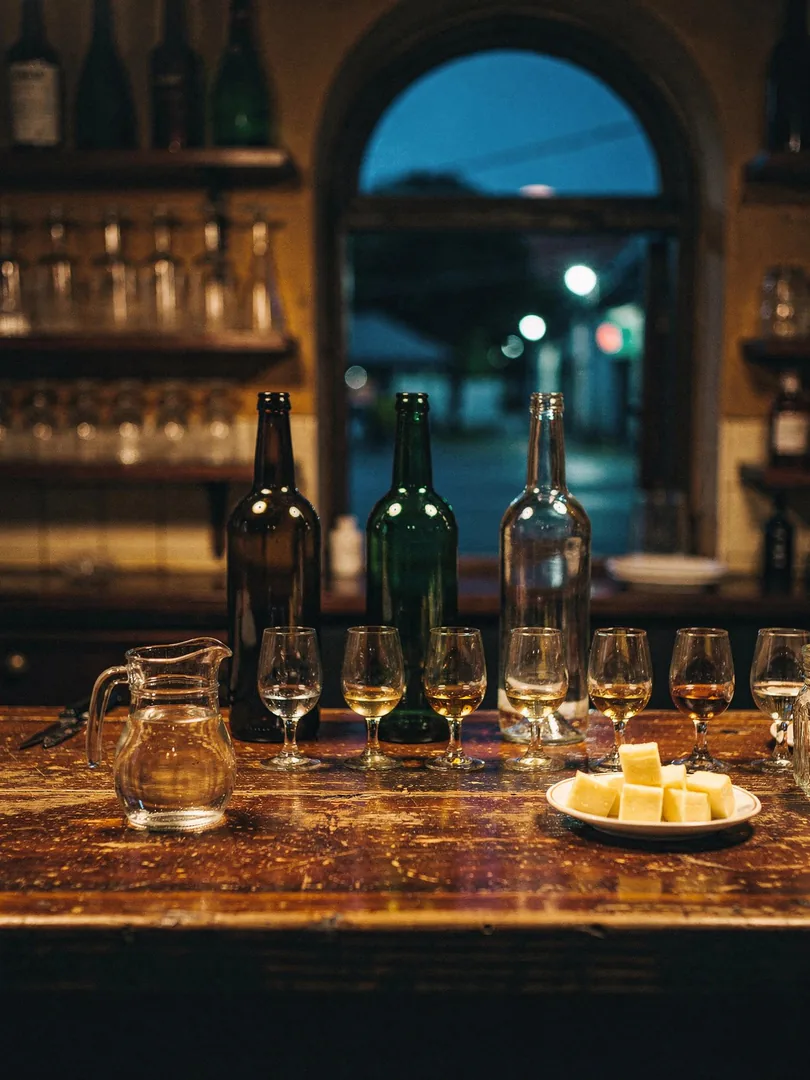
A nosing glass or a tulip-shaped glass with a narrower rim concentrates the aromas better than a tumbler. Room temperature is fine; chilled, the aroma closes up. Smell briefly first, then take a small sip. A few drops of water open up stronger bottlings; at 38 to 40 percent, it's hardly necessary. To compare, try a branca and an envelhecida back to back, ideally with a sip of water in between.
Three questions help with comparing: how does the cane or wood smell, how does the Cachaça feel in the mouth, and how long does the finish last? Copper-still Cachaça often feels oilier than the column-still version. An adoçada stands out for its sweetness and shouldn't be measured against dry expressions.