Trade, Not Distilling
Region & History
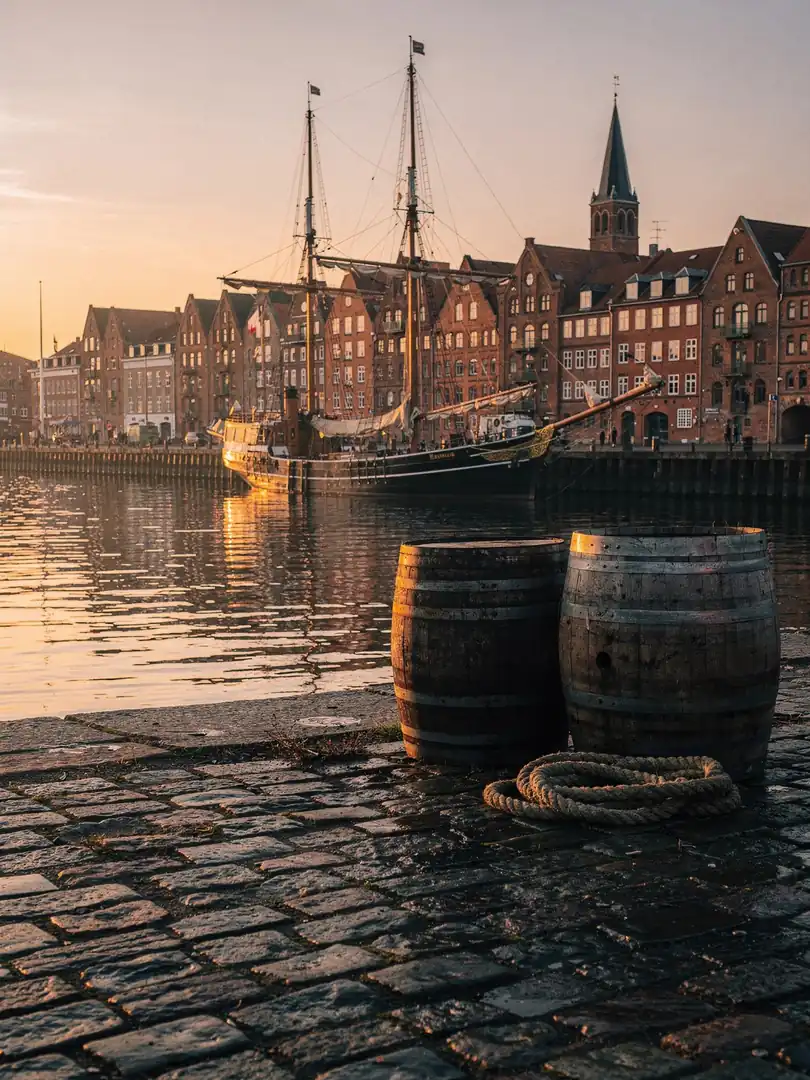
Flensburg lies at the inner end of a fjord that opens onto the Baltic Sea, and until 1864 it belonged to the Danish crown. From 1755 onward, ships from the city sailed to St. Croix, and later also to St. Thomas and St. John, the Danish islands in the West Indies. On the return journey they carried sugar and rum, along with cotton, tobacco and dyewoods.
Behind this trade lay plantations where enslaved people from Africa grew, cut and processed the sugar cane. Flensburg's merchants' courtyards, sugar refineries and rum houses lived off this forced labor. In the 1830s, more than a million litres of rum a year arrived in the city from the three islands.
At its peak, Flensburg counted more than 200 rum houses. These were merchants who took in the barrelled goods, stored them, blended them and bottled them. The rum itself was not distilled in Flensburg but over on the islands. Here developed the craft of blending: checking casks, assembling batches, bringing the spirit to drinking strength.
With the transfer to Prussia in 1864, the duty-free rum from the Danish islands was lost. As the story usually goes, the houses then bought Jamaican rum and blended it with neutral spirit and water. This gave rise to Flensburg Rum-Verschnitt, a term still in use today.
Two houses remain. A. H. Johannsen, founded in 1878, is considered the oldest rum house still operating in the city, alongside the wine and rum house Braasch on Rote Straße. Neither Flensburg rum nor the Rum-Verschnitt enjoys protected designation of origin. It is a special German category under EU law, not a protected origin, and legally not rum at all.