Cargo from the West Indies
Sugar Cane & Molasses
Anyone looking for sugar cane fields in Flensburg won't find any. The grass needs warmth, and the fjord lies far outside the zone where it grows. What made the city a rum town came from St. Croix, St. Thomas and St. John, where the cane stood on plantations. Enslaved people cut it there by hand and carried it to the mills.
At the mills, the juice was pressed out and boiled down. This produced raw sugar and molasses, a dark, viscous residue from which barely any more sugar can be extracted. On St. Croix, wind often powered the mills, and the remains of such towers still stand there today.
Molasses is the raw material for most rum. Fresh sugar cane juice, fermented directly, instead yields rhum agricole, with syrup falling somewhere in between. Under EU law, rum may only be made from one of these sugar cane products. Alcohol from sugar beet or potatoes is not rum, even if it sits brown in the bottle.
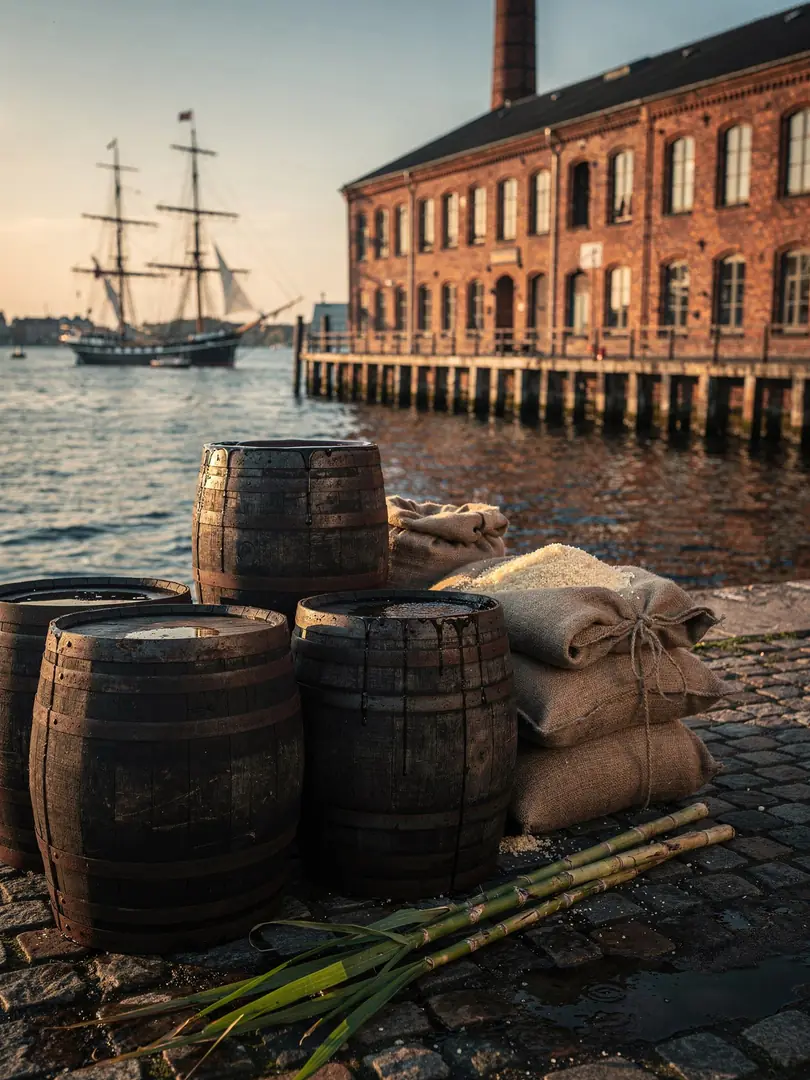
In Flensburg, the sugar cane was merely cargo. The raw sugar went to the city's sugar refineries, the rum to the houses. Anyone following the Rum and Sugar Mile today sees the merchants' courtyards and warehouses where the cargoes from the West Indies were stored and sold on.
At the Maritime Museum by the harbor, sugar has its own section, which presents sugar, rum and slavery together. That is the right order: first the work in the fields, then the trade, and only at the end the glass.