The Brown Leftover
Sugarcane & Molasses
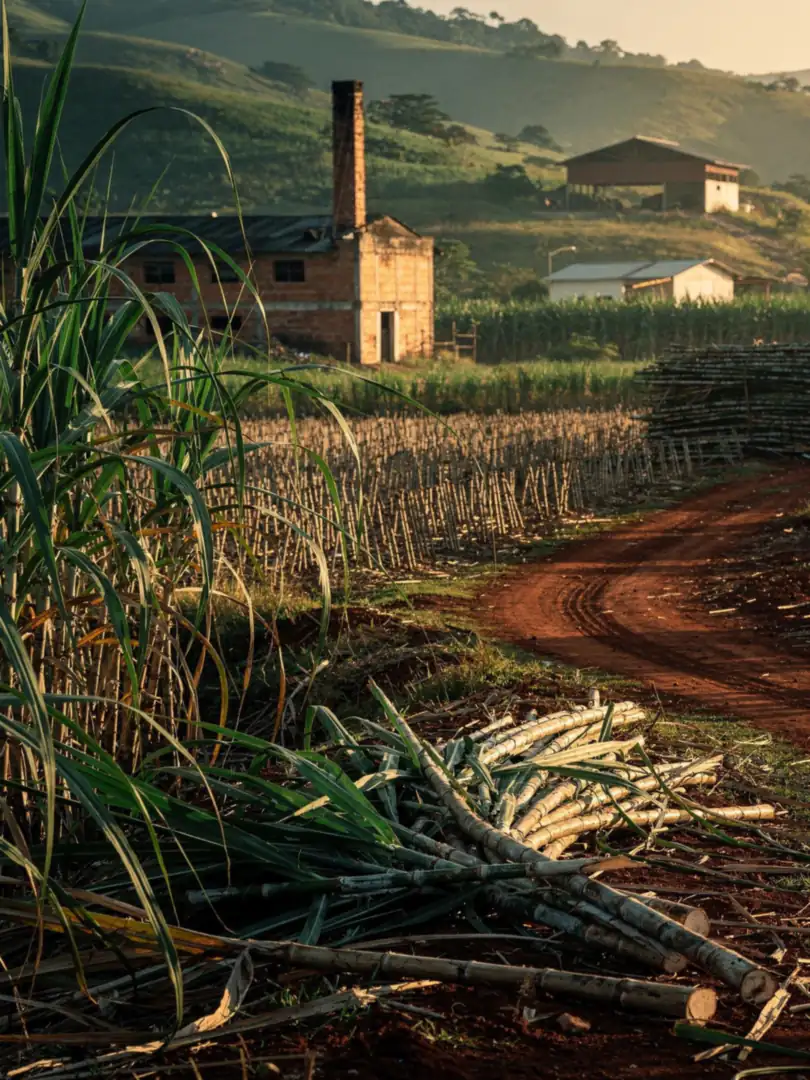
Brugal and Bermúdez don't distill fresh sugarcane juice, but molasses. This is the name for the thick, dark brown residue left over in the sugar factory once the sugar has crystallized out of the boiled cane juice and been spun off.
This molasses still contains plenty of fermentable sugar, which is why it's a raw material for distilleries rather than waste. It can be stored in tanks, so the distillery isn't tied to harvest time. Sugarcane juice, by contrast, turns quickly and must be fermented shortly after pressing. This is why rhum agricole is produced close to the field, while molasses rum can be distilled anywhere the raw material is delivered.
Syrup, the third option, is made by simply thickening cane juice without separating anything out. The houses of the Cibao name molasses as the raw material for their rums.
The Cibao itself is primarily farmland. Between the Cordillera Septentrional and the Cordillera Central lies a broad valley through which the Río Yaque del Norte flows. Tobacco, bananas, and sugarcane grow on the fertile soil, and dairy farming also takes place here. The tobacco from the valley around Santiago is considered among the best in the world.
Molasses no longer tastes sweet in the glass, because the sugar was converted into alcohol during fermentation. Anyone who perceives sweetness in a rum is usually tasting added sugar. The EU permits up to 20 grams per liter. Caramel coloring, on the other hand, only adds color and has nothing to do with sweetness. Together, these two facts explain why a dark rum isn't automatically an old or sweet one.