Clean Instead of Wild
Fermentation
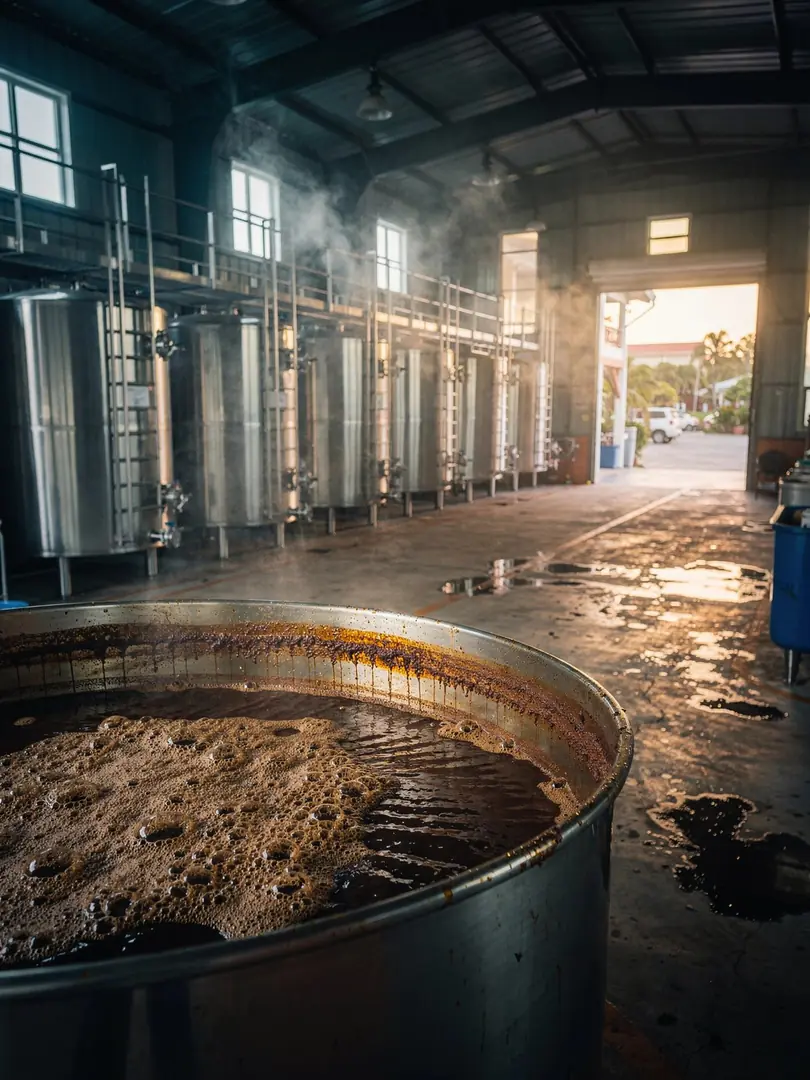
Thick molasses can't be fermented unless it's diluted with water. In the fermentation tanks, this creates a thin, dark mash in which yeast converts the sugar into alcohol and carbon dioxide. This process releases heat, and in the tropical climate the mash must be cooled to keep the yeast working properly.
Brugal works with added yeast. So this is not a wild fermentation using yeasts from the air. Cultured yeast gives the master blender more control over speed and aroma, and the result comes out consistent batch after batch, which is exactly what houses with large brands want.
Fermentation produces esters from acids and alcohol—volatile aroma compounds that smell of fruit. The longer and wilder the fermentation, the more of these develop. Jamaica's high-ester rums show just how far this can go. In the Spanish style, the opposite is desired: a clean, calm base flavor, on which the cask later builds.
The two houses ferment in different places. Bermúdez has its distillery in Santiago, right in the heart of the tobacco valley. Brugal, by contrast, ferments and distills in San Pedro de Macorís in the southeast of the country; only the barrels are aged in the north, in Puerto Plata.
A rum is thus shaped already in the fermentation tank, long before it reaches the column or the barrel. The master distiller determines with yeast, temperature, and duration how much fruit the mash will yield. The light character of Cibao rums begins with the deliberate decision to allow only a little of this.