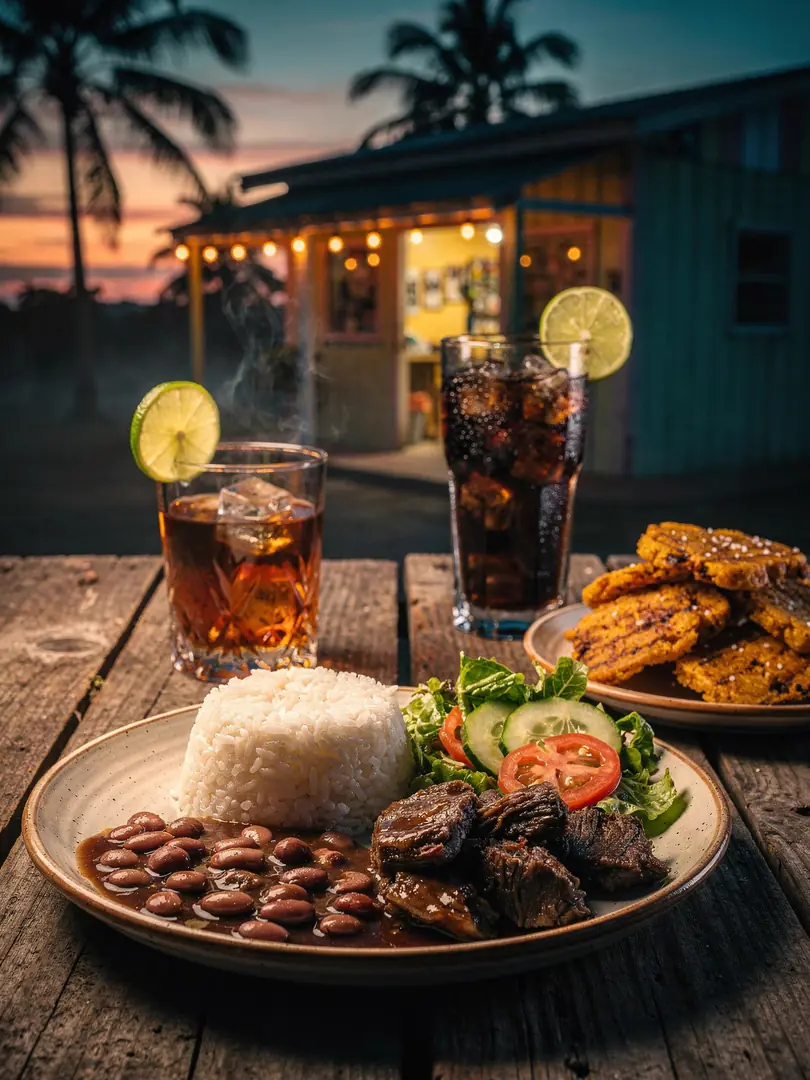
Bandera and colmado
Food & Drinking Culture
Lunch in many households is called la bandera, "the flag": rice, red beans, braised meat, and a salad. In the morning, mangú appears on the table, a mash of boiled green plantains with onions, served with egg, fried cheese, or salami.
Sancocho, a stew made with several kinds of meat, cassava, yams, plantains, and corn, is considered a festive dish. It's hearty, rich, and salty. Dishes like this pair especially well with a rum full of vanilla and caramel, since the sweetness balances the salt and the wood stands up to the richness.
Fried foods like tostones, flattened plantains, and chicharrón go well with a simple rum and cola with lime. The mix is called ron con cola, and in many places it's ordered at the colmado, the corner shop that doubles as a gathering spot. Alongside the shelves of groceries there's usually a small counter, and on some evenings, dominoes are played out front. Here, rum is mostly about company rather than quantity.
A classic non-alcoholic drink is morir soñando, literally "dying while dreaming": orange juice, milk, sugar, and crushed ice. The recipe contains no rum, yet the blend of acidity and creaminess has made it a fixture of Dominican drinking culture all the same.
In San Pedro de Macorís, descendants of the cocolos keep the Guloyas alive, a costumed dance theater that recalls the immigrants from the English-speaking islands. In this way, the food and festivities of the Southeast still tell the story of the sugar era to which the region owes both its cities and its rum.