Nose, palate, finish
Tasting
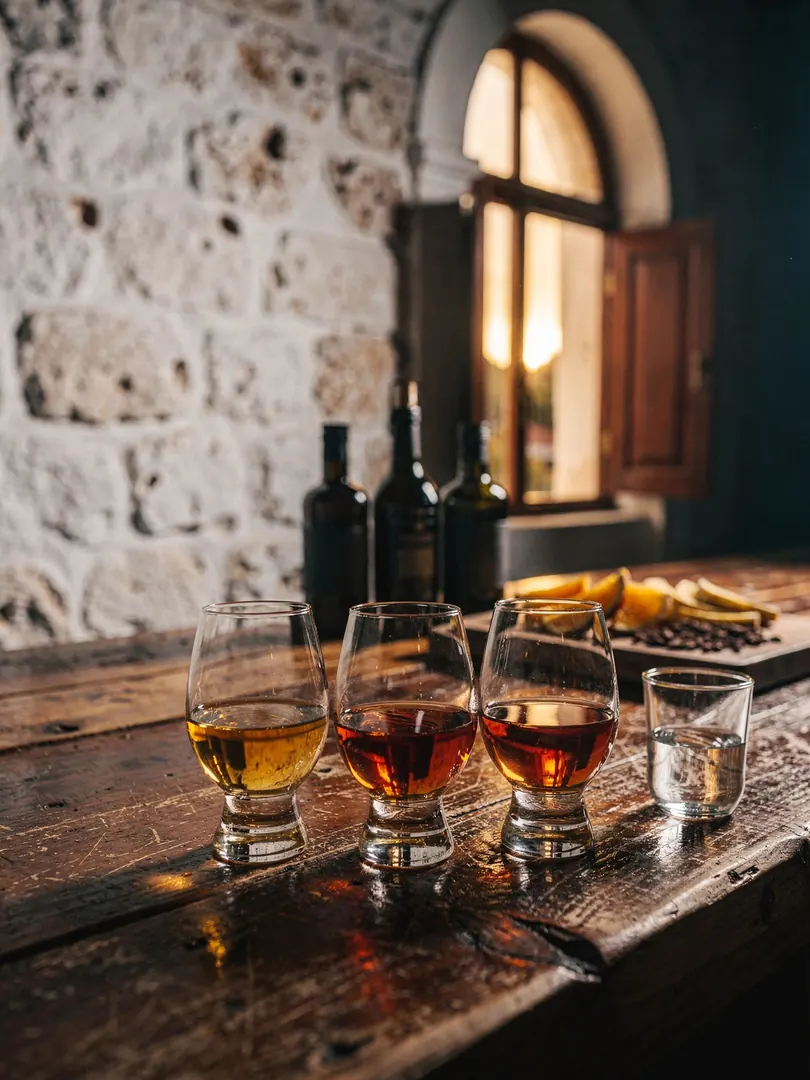
A Dominican Añejo shows best in a nosing glass with a narrow opening that concentrates the aromas, or in a small tumbler. Room temperature, roughly 18 to 20°C (64–68°F), is enough, since cold dampens the aromas and their sweetness along with it.
Three lines from one house in Santo Domingo make for a good comparison: Ron Barceló Blanco, Barceló Gran Añejo, and Barceló Imperial. The Blanco is the lightest stage, while Gran Añejo and Imperial are among the aged expressions. Nosing them side by side reveals how freshness and sweetness gradually give way to wood, caramel, and spice.
First, nose the rum without bringing the glass too close, so the alcohol doesn't overpower everything. Then take a small sip and hold it briefly in the mouth: sweetness upfront, wood and spice in the middle. The finish shows how long the flavor lingers.
At 37.5 to 40% ABV, this rum needs barely any water. A few drops can reveal whether it opens up further, but rarely more is needed. Those new to rum will notice the sweetness first and the wood afterward.
A rum tasting sweet doesn't necessarily mean added sugar. Vanilla and caramel from the cask can mimic sweetness even when nothing's been added. That's why it's worth tasting a young rum directly against an older one. Short notes help: sweetness, wood, spice, and the length of the finish.