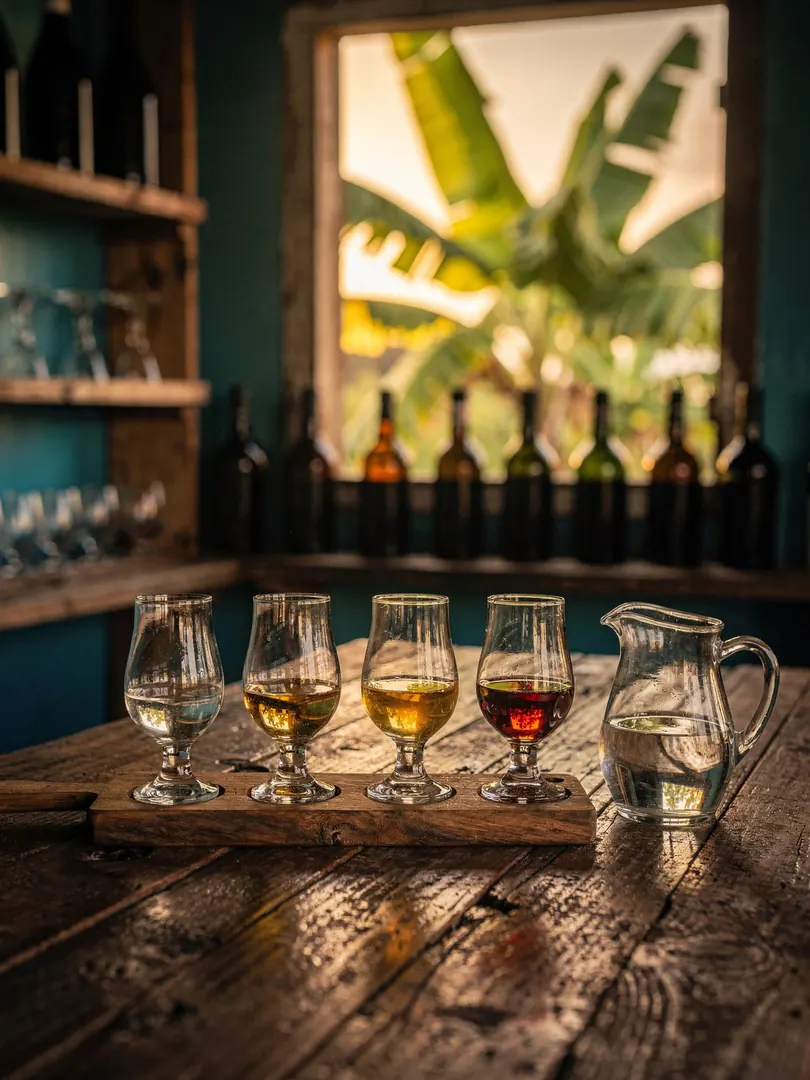
Four Houses Side by Side
Tasting
Tasting rhum agricole neat begins with the nose. A white agricole from Basse-Terre smells of freshly cut sugarcane, wet grass, citrus peel, and black pepper; with longer fermentation, ripe fruit and florals join in. Ideally, the cane smells sweet and green at the same time, not of alcohol.
Four houses make for a good comparative lineup. Reimonenq in Sainte-Rose, according to the house, stands for cane juice rum from short fermentation, while Montebello in Petit-Bourg represents white rums from long fermentation. Bologne, on the volcano's slopes, brings black cane to the glass, and Longueteau in Capesterre-Belle-Eau shows with its Parcellaires how site and parcel can color flavor. Tasting them side by side reveals the differences in grass, fruit, and spice.
A tulip glass with a bulbous body and narrower rim gathers aromas better than a wide tumbler. The rum should be at room temperature, around 18 to 20°C (64 to 68°F), since cold mutes the aroma and makes the alcohol seem sharper. Bring your nose deep into the glass, but not too deep — alcohol vapor numbs the senses. A white agricole at 50 percent carries plenty of power.
Start with a small sip, held briefly in the mouth. The alcohol bites at first, then sweetness, vegetal notes, and pepper emerge, and the finish shows how long the rum lingers. A drop of water then helps open up the aromas — half a teaspoon is enough.
Aged bottlings, such as a six-year-old Rhum vieux from Longueteau, need less water. Here vanilla, spice, wood, and dried fruit take the lead, while the cane note remains audible as a foundation. Neat or with water: the key is to taste in small amounts and sip water between rums.