Sugar Estates on the Atlantic
Region & History
Where does the name Demerara Rum come from? From the Demerara River, which flows into the Atlantic near Georgetown. Along its banks and further east along the Berbice, the Dutch founded colonies in the 17th century where sugarcane soon began to grow. In the early 19th century the territories fell to Great Britain and were united in 1831 as British Guiana. The flat alluvial land lies partly below sea level, and drainage canals still shape it today.
The sugarcane was planted, cut and processed by enslaved people from Africa. In 1763 enslaved people in Berbice rose up against the planters under Cuffy; the revolt was crushed, but Cuffy is regarded as a national hero in Guyana today. Slavery ended in the British Empire in 1834, though until 1838 the freed people still had to work for their former owners under an apprenticeship system.
Afterward, planters lacked workers because many freed people left the estates. From 1838 they brought in indentured labourers from India, initially bound for five years. By 1917 around 239,000 people had arrived, making Guyana the largest recipient of Indian indentured labourers in the Caribbean. Historians describe their situation as barely better than that of the enslaved before them. A large part of today's population descends from this era.
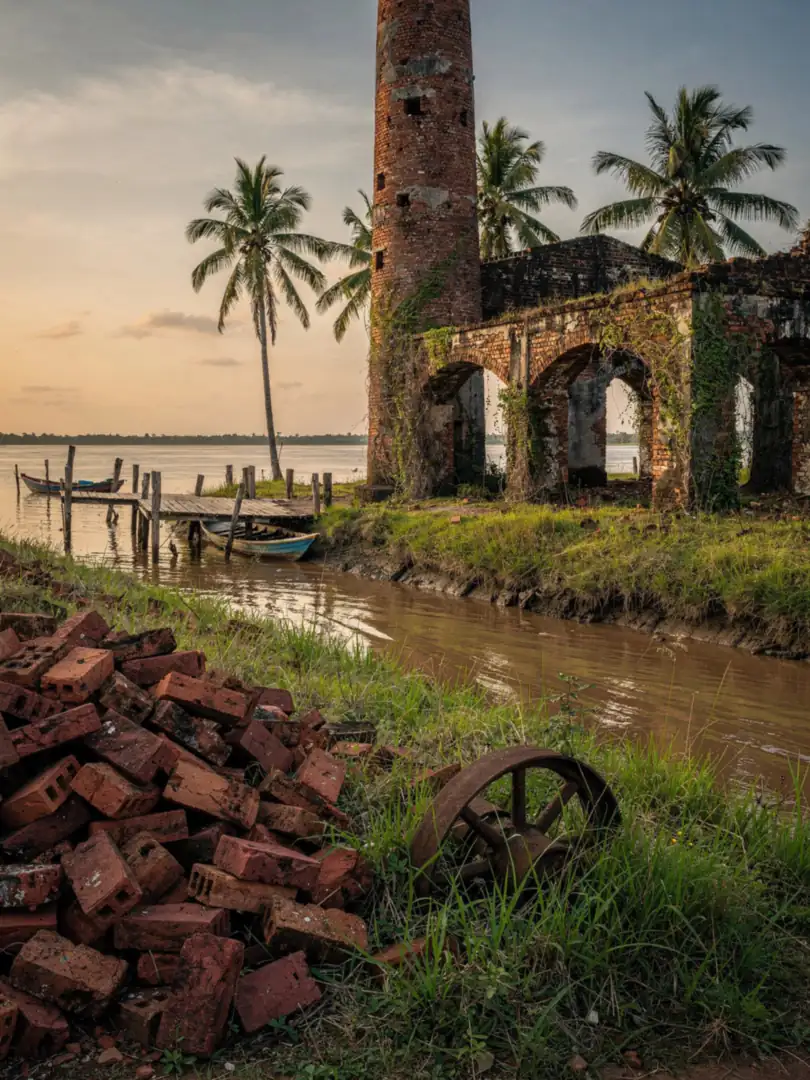
Many sugar estates had their own distillery, each with its own still and its own character. After independence in 1966 and the nationalisation of the sugar estates in 1976, a number of these operations closed; in 1983 the remnants were merged into a single company. Uitvlugt gave up around the turn of the millennium, and since then only a single distillery has operated, at Diamond.
The name Demerara Rum is now registered as a geographical indication in the EU, with the designated area being the coastal plain between the Boeraserie River and the Abary Creek. Names like Port Mourant, Versailles and Enmore have survived thanks to the stills that were rescued from closed estates.