Mud, Canals, Molasses
Sugarcane & Molasses
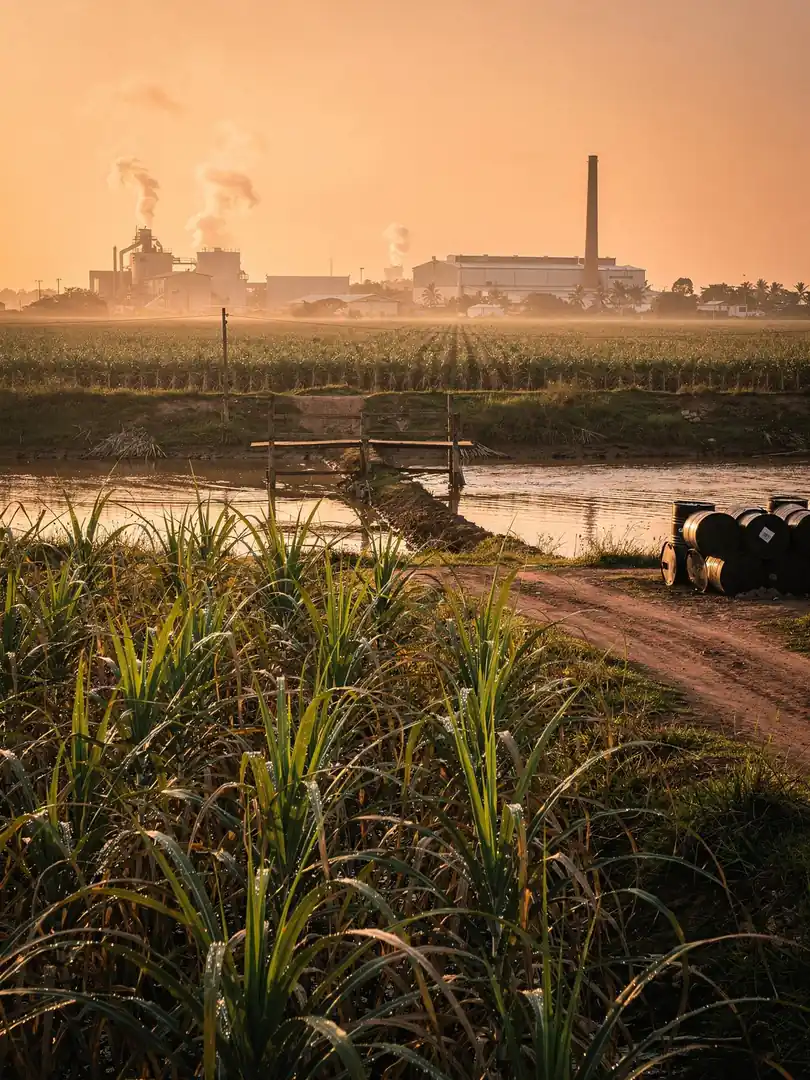
Fly over the coast of Guyana and you'll see dead-straight canals and rectangular fields in a narrow strip between the sea and the rainforest. On this alluvial land, which stretches all the way to the Corentyne in the east, grows the sugarcane that supplies the sugar and molasses for the rum. Even the brown, coarse-grained Demerara sugar found on supermarket shelves takes its name from this coast.
The soil is heavy clay and silt, reclaimed from the sea by the Dutch with dykes, canals and sluices. The sluices are called kokers there, letting water flow out to sea at low tide and holding it back at high tide. Two rainy seasons and steady warmth allow the cane to grow almost year-round, with harvesting taking place in the drier months.
At the sugar factory, the cane is pressed, the juice boiled down, and the sugar crystallised. What remains once the sugar has settled out is molasses: a dark, viscous syrup still rich in fermentable sugar. This is what rum from Guyana is generally distilled from, not fresh juice. That sets it apart from the rhum agricole of the French Antilles.
The difference comes down to practicalities. Fresh sugarcane juice begins to ferment within hours and can only be processed during harvest. Syrup is boiled-down juice and keeps better, but it costs the factory sugar it could otherwise sell. Molasses, on the other hand, can be stored in tanks and is available year-round, so sugar production and rum-making complement one another.
The state-run sugar industry has shrunk considerably in recent years. The government planned to keep only three factories: Albion and Blairmont in Berbice, and Uitvlugt. At Uitvlugt the sugar factory continues to operate, even though its distillery closed long ago. In earlier times, the factory and distillery stood side by side on the same estate, and each still received the molasses from its own estate.