Warmth and Yeast
Fermentation
The figures in the Demerara specification read plainly enough: fermentation at around 32 degrees Celsius, until the mash reaches six to eight percent alcohol by volume. Yet these two figures hold a good deal of rum's character, because temperature and time determine what the yeast produces besides alcohol.
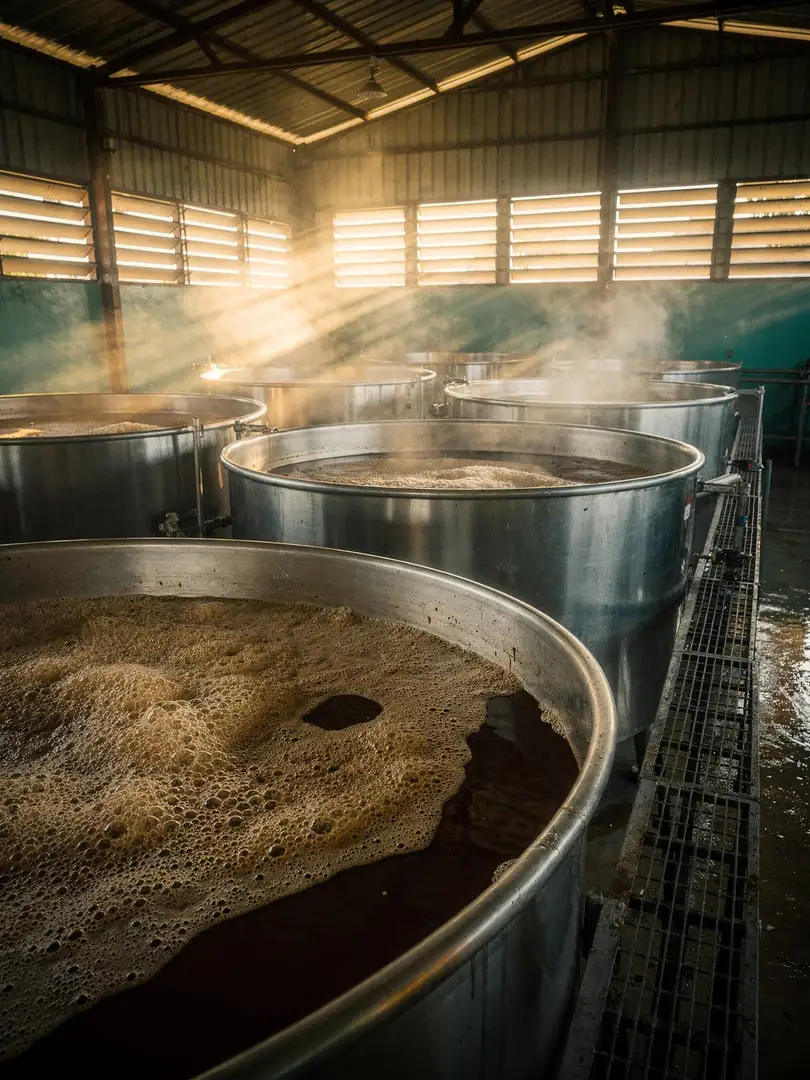
Yeast feeds on the sugar in diluted molasses and turns it into alcohol and carbon dioxide. At around 30 degrees it works briskly, feeling right at home; if it gets significantly hotter, it suffers. The fermented wash reaches six to eight percent, closer to the strength of a strong beer than a wine, which usually sits at eleven to fourteen percent.
Alongside alcohol, acids, higher alcohols and esters are formed. Esters are aromatic compounds created when acids react with alcohol; depending on the amount, they can smell of ripe fruit, solvent, or glue. Whether a rum ends up light or powerful depends heavily on how many of these congeners make it into the distillate.
The specification measures this in grams per hectoliter of pure alcohol: a light marque has fewer than 30 grams of congeners, of which fewer than 10 are esters. The medium class ranges between 30 and 300, with esters between 10 and 50. A heavy marque has over 300 grams of congeners and more than 50 esters. How far fermentation is pushed, and how the rum is distilled afterward, determines the class.
For the drinker, this means: the difference between an El Dorado with a light profile and a heavy rum from Diamond isn't found on the label. The difference between a mild white rum and a spicy, almost tar-like cask rum from Guyana isn't made in the barrel. It's decided in the fermentation vat. Aging can later refine, round out, and add color, but it doesn't add the fruity or dense notes fresh — those were already laid down during fermentation.