Molasses from Sugar Factories
Sugarcane & Molasses
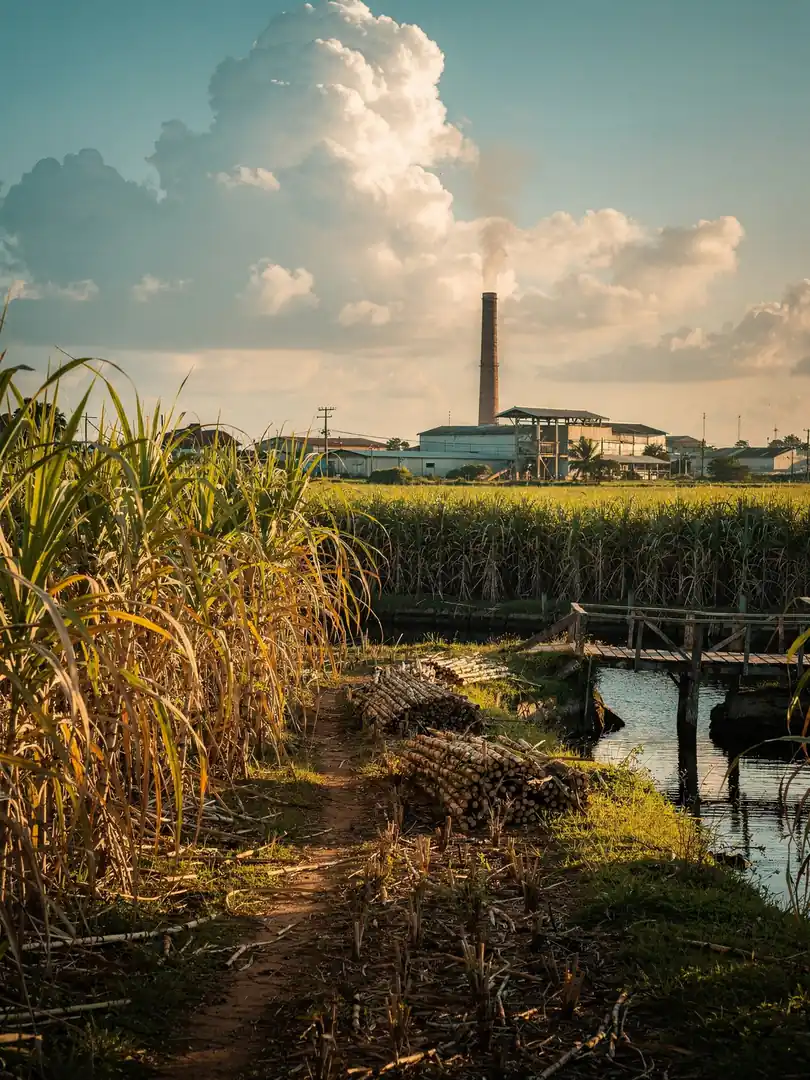
Anyone driving south from Georgetown crosses canals that separate the land from the water. Guyana's coastal plain lies partly below sea level; Dutch settlers built dikes and drainage ditches so sugarcane could grow at all on the heavy, silt-laid clay. Without these ditches, there would be neither sugar nor rum here.
The climate does the rest: steady warmth all year round, plus plentiful rain that the canals carry away again. A sugar also bears the region's name. Demerara sugar is brown cane sugar with light-brown, slightly sticky crystals. The state sugar company GuySuCo sells its sugar under the name Demerara Gold and names the molasses for El Dorado as a byproduct.
Molasses is the dark syrup left over once sugar has crystallized out of the cane juice. It still contains plenty of fermentable sugar, along with minerals and roasted notes. For Demerara Rum, it's the standard raw material; the specification names molasses or another sugarcane-derived substrate. Anyone fermenting fresh cane juice, as with Rhum Agricole, takes a different path from this distillery, which uses the sugar factory's byproduct.
That makes the distillery dependent on the sugar factories. When several sugar estates were shut down, DDL reportedly expressed deep concern over its molasses supply, according to press reports, and in 2018 the Stabroek News reported molasses imports from Nicaragua. Where a rum's molasses comes from is therefore no longer the same answer for every batch that it was decades ago.
At an operation where sugar factory and distillery stand side by side, the path is short: the cane is pressed, the juice boiled, the sugar extracted, and what remains flows into the distillery's tanks. Diamond sits on the grounds of an old sugar estate on the eastern bank of the Demerara and carries on this tradition, even if supply chains today can run longer.