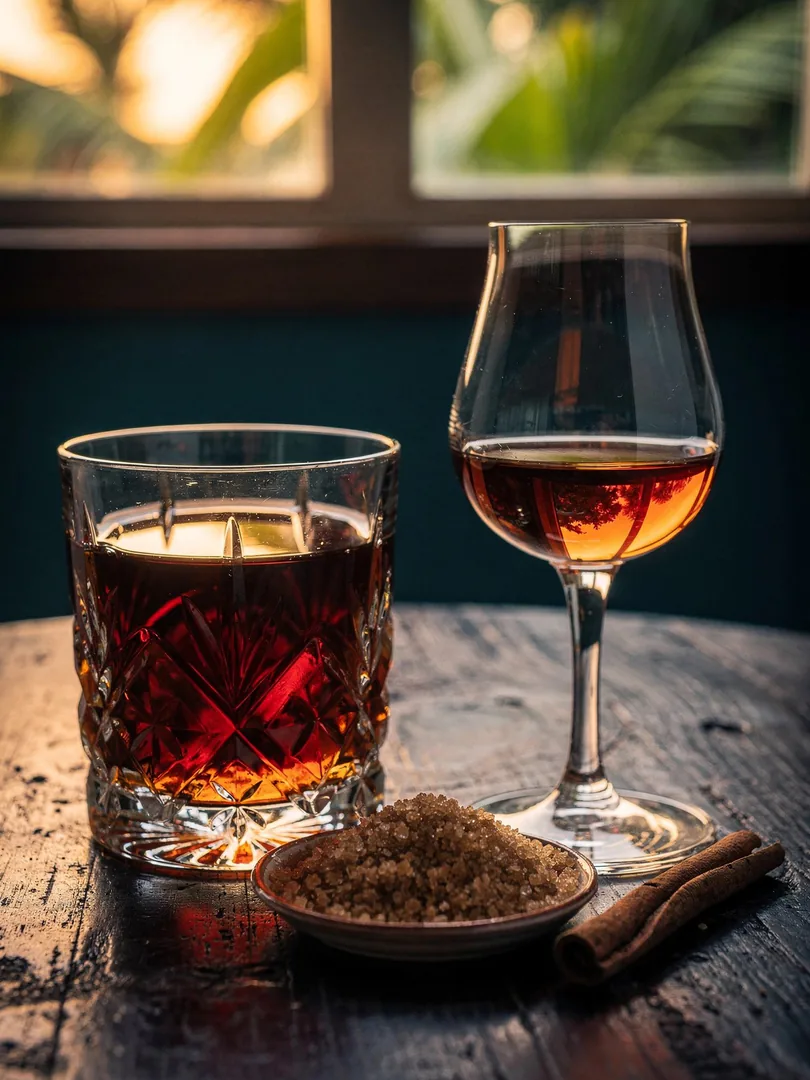
Light, medium, heavy
Rum style
Demerara Rum isn't a single flavor but a family of three body classes. They're called light, medium and heavy, and they differ in the amount of congeners that remain in the distillate after distilling: under 30 grams per hectoliter of pure alcohol for light, 30 to 300 for medium, and over 300 for heavy. The figure is measured in a laboratory, not estimated.
A light Demerara comes from the column still. It's clean and dry, with few fruit esters, and works well in mixed drinks because it doesn't dominate. The medium style already brings dark sugar and spice. With age, it becomes what people associate with Guyana: brown sugar, toffee, dried fruit, and a light smoky note.
A heavy Demerara comes from the pot still. It's denser and more robust, often showing dark fruit, tar and licorice, with a long finish. It's mainly used for blending, since it gives a blend depth. Some bottlers also release individual marques unblended.
The name Demerara hides a common misunderstanding. Demerara sugar and Demerara Rum share the same name because both come from the area along the river, but otherwise have nothing to do with each other. The brown sugar is a foodstuff, the rum a distillate, and only the rum falls under the protected designation of origin.
For comparison with other rum regions: the Demerara style of Diamond and El Dorado sits between Cuba's light Spanish-style rum and Jamaica's ester-rich rum. It's spicier and darker than the former, but usually less fruity and pungent than the latter. The three profiles below show where the classes fall in terms of strength and maturation time.
Demerara Light & MediumMolasses · Column still
- Alcohol
- 40–43 % vol
- Cask ageing
- 0–25 Years
Soft, dry to caramel-like, few esters, toffee and spice with age.