Sugar, wood, spice
Tasting
A glass of Demerara often smells first of dark sugar. Behind that come caramel, raisins or plum, a hint of smoke, plus wood and spice like cinnamon and nutmeg. This isn't a fixed rule, but what tasting notes on El Dorado and Diamond repeatedly describe. Each batch can turn out a little different.
Three rums from the Diamond distillery serve well as examples. According to the house, El Dorado 12 is a blend of column and pot still rum aged at least twelve years in used bourbon casks, and it's considered the softer, rounder entry point. El Dorado 15 also includes distillates from wooden stills and comes across denser, spicier and longer on the finish. Diamond Reserve belongs to the entry-level range of the same distillery.
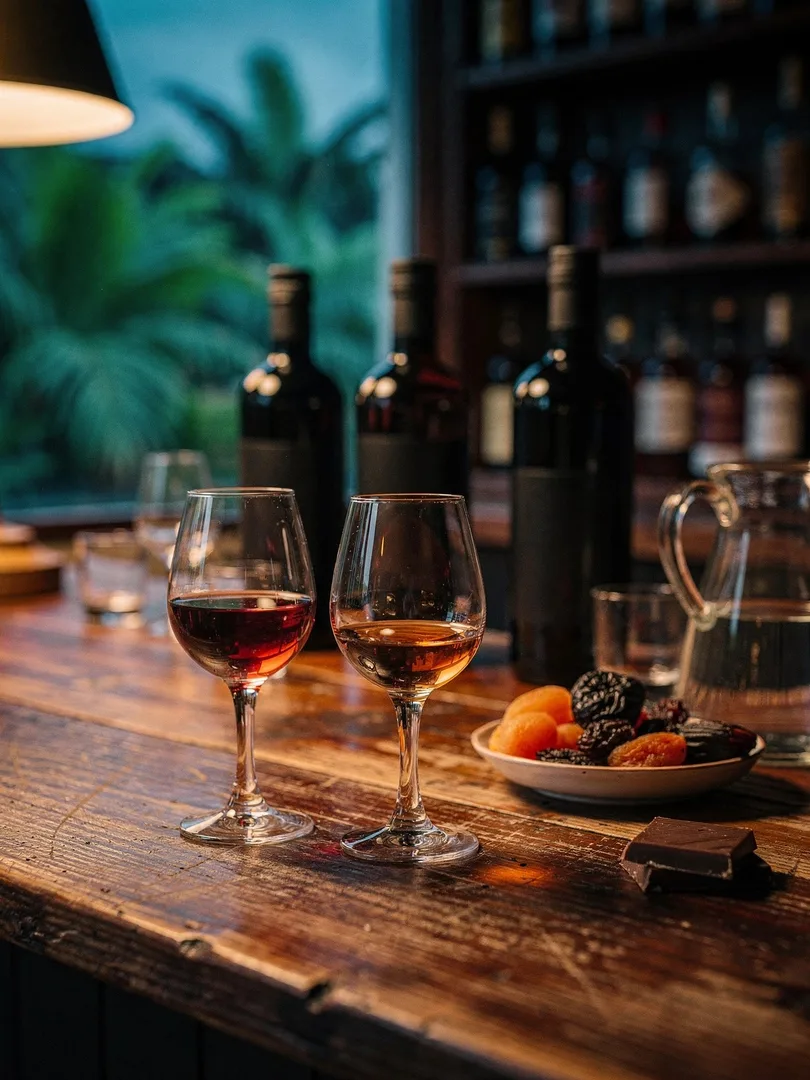
A nosing glass or tulip-shaped glass concentrates the aromas better than a wide tumbler. Room temperature, around 18 to 20 degrees Celsius, works best; served cold, the aromas seem flat, and cold also emphasizes bitterness. A quick swirl of the glass shows how the rum runs back down the sides in streaks, which says something about body and density, but nothing about quality.
Adding water opens up the nose. Start with a small drop or a teaspoon, then wait and smell again. At 40 to 43 percent ABV, it rarely takes much; with cask-strength bottlings at 55 to 60 percent, a full splash of water may be needed before the alcohol's sharpness stops masking the aroma.
One special feature: the specification allows up to 20 grams of sugar per liter, and such sweetness quickly makes a dark rum taste soft and round. Anyone wanting to judge the taste of the wood and the molasses for themselves can try the same brand neat and then with a little water, noticing how much comes from the cask and how much from the recipe.