Yeast Instead of a Pit
Fermentation
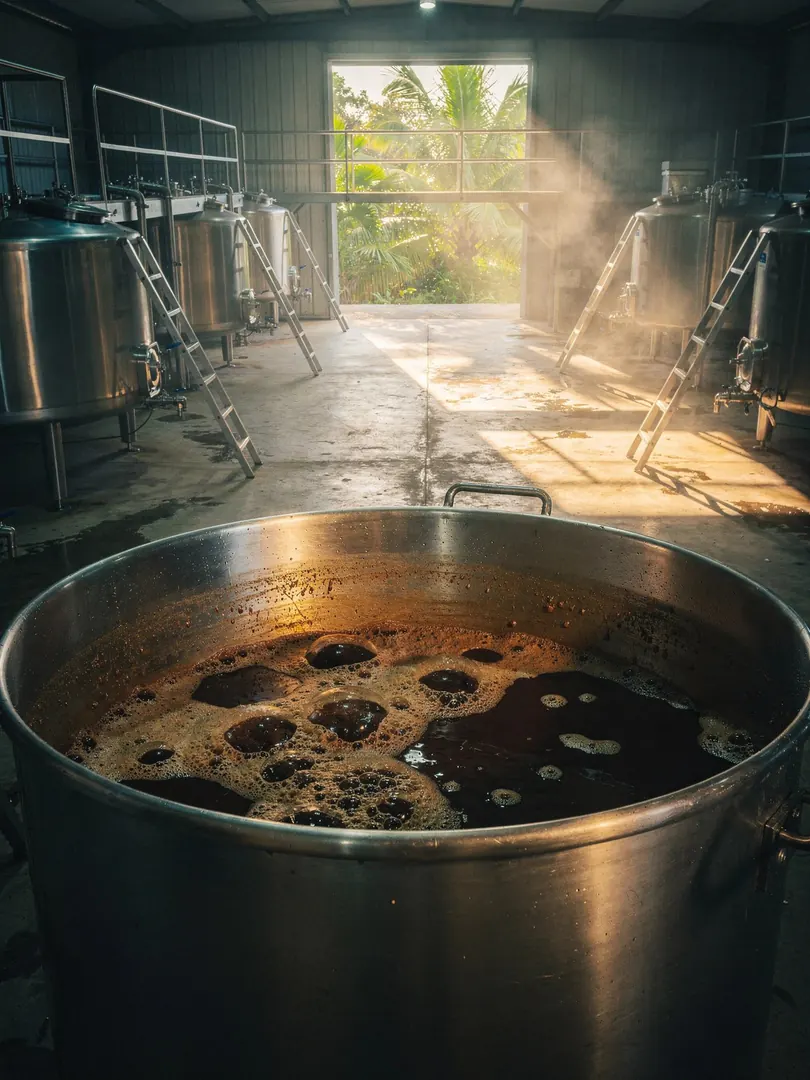
In Clarendon, two setups operate side by side, each with its own fermentation tanks. The older section belongs to the pot stills, while the newer section with the column still has its own fermentation house. There, yeast consumes the sugar in the diluted molasses and turns it into alcohol, carbon dioxide and heat.
What ends up smelling of banana, pineapple or glue is what experts call esters. They form when acids and alcohol react with one another, and the longer and more acidic the fermentation, the more of them end up in the rum. They're measured in grams per hectolitre of pure alcohol. Jamaica has old trade classifications for this: Common Clean sits at 80 to 150, Plummer at 150 to 200, Wedderburn at 200 to 300, and the high-ester class Continental Flavoured at 700 to 1,600. These names aren't an official standard.
Dunder is the name for the residue, or spent wash, left in the still after distillation. Some Jamaican distilleries return it to the next fermentation. Others let additional muck grow in earthen pits — a bacteria-rich brew that supplies acids and thus esters. Worthy Park has no dunder pit. According to the house, it relies instead on special yeast strains and modern technology.
A shorter fermentation usually yields a lighter, cleaner rum, while a long, acid-rich fermentation produces something bold and fruit-forward. Which yeast works in the vat, how warm it gets, and how long the fermentation runs already determines the aroma before the still is even heated.
For the white rum from New Yarmouth, that means: the overproof isn't refined in the cask, since Wray & Nephew White Overproof is bottled unaged. The fruity character it's known for must therefore come from fermentation and distillation. That it smells of pineapple and banana despite its strength shows just how much is decided at this first stage.