Cane and Molasses
Sugar Cane & Molasses
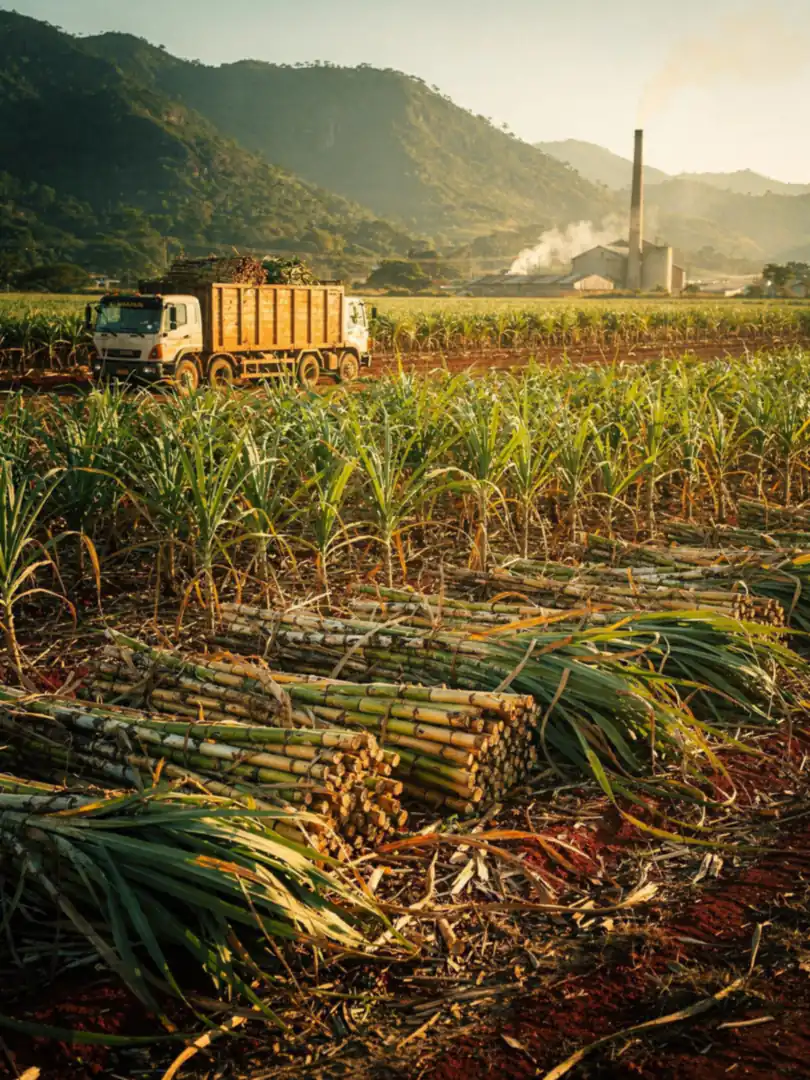
On the Vere Plain near Monymusk, sugar cane grows on irrigated land in the south of the island. The harvest is called Crop in Jamaica and traditionally begins in December on the calendar. In recent years, the Monymusk factory has usually not started up until late January or early February, especially when rain delayed the start.
At the factory, the cane is crushed and the juice pressed out. The juice is boiled down until sugar crystals form. What can no longer be crystallised remains as a dark, viscous residue called molasses. It's from exactly this residue that the rum in question here is made.
The Clarendon distillery sits right next to the factory and receives its molasses from there. When the factory is idle, tanker ships bring in supplies. This means the rum isn't tied to the few weeks of the crop season but can be distilled year-round.
Rum can be made from three raw materials derived from sugar cane. Molasses is what remains after sugar boiling, cane juice is the freshly pressed juice, and syrup is the thickened juice. The Jamaica Rum geographical indication permits all three. In Clarendon and Lluidas Vale, however, molasses is the material of choice: it can be stored, tastes strongly of caramel, and still contains enough fermentable sugar. How juice instead yields a quite different, grassy rum is explained in the piece on Rhum Agricole.
In Lluidas Vale, field, sugar factory and distillery all sit on one site. According to Worthy Park, the rum there is made from cane to glass in a single location, with molasses sourced from its own factory. The valley is surrounded by mountains and considered fertile. Travelling from the south through Clarendon, then, means moving from an irrigated plain into a basin with an entirely different landscape.