Yeast, Heat, Esters
Fermentation
How much character lies in the yeast? According to the estate, Appleton Estate uses its own non-GMO yeast strain, passed down from batch to batch for generations. Wild airborne yeasts play no role here. This approach aims for a house style that feels consistent year after year.
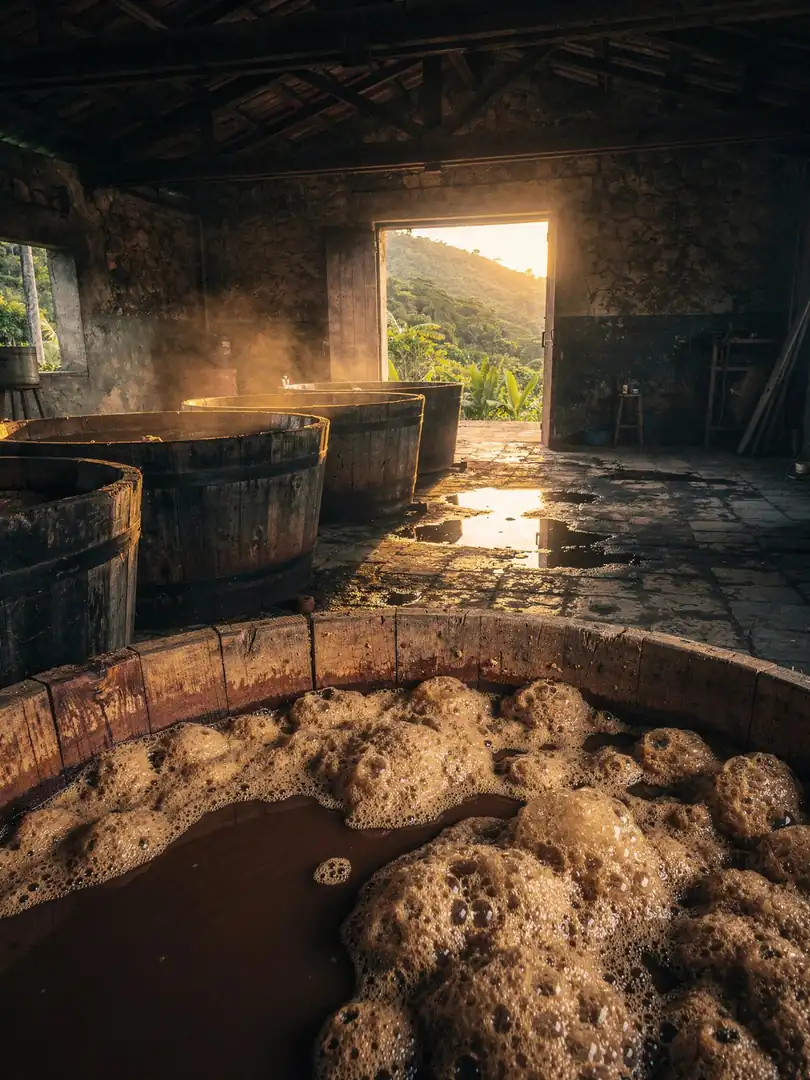
What happens in the vat? The diluted molasses meets the yeast, which consumes the sugar and releases alcohol, carbon dioxide and heat. Foam forms on top. The result is a fermented wash with usually less than ten percent alcohol, a kind of strong sugar beer that isn't yet drinkable.
Besides alcohol, yeast produces many by-products, including acids. When these combine with alcohol, esters form, compounds that smell of fruit, blossom and sometimes solvent. The more time and bacteria involved, the more esters accumulate.
The house describes its rums as balanced and aromatic. A fermentation with cultured yeast provides a reliable foundation for this: it delivers enough fruit without tipping into extremes, and the blending team can later draw on casks with a similar profile.
Fermentation sets the framework for everything that follows. Whatever the yeast doesn't establish, no amount of cask ageing can make up for, and whatever turns out too loud, the wood can only smooth so far. That's why every blend by Master Blender Joy Spence begins with this unassuming step, one no visitor ever tastes, even though it predetermines every later decision in the warehouse and in the blending room.