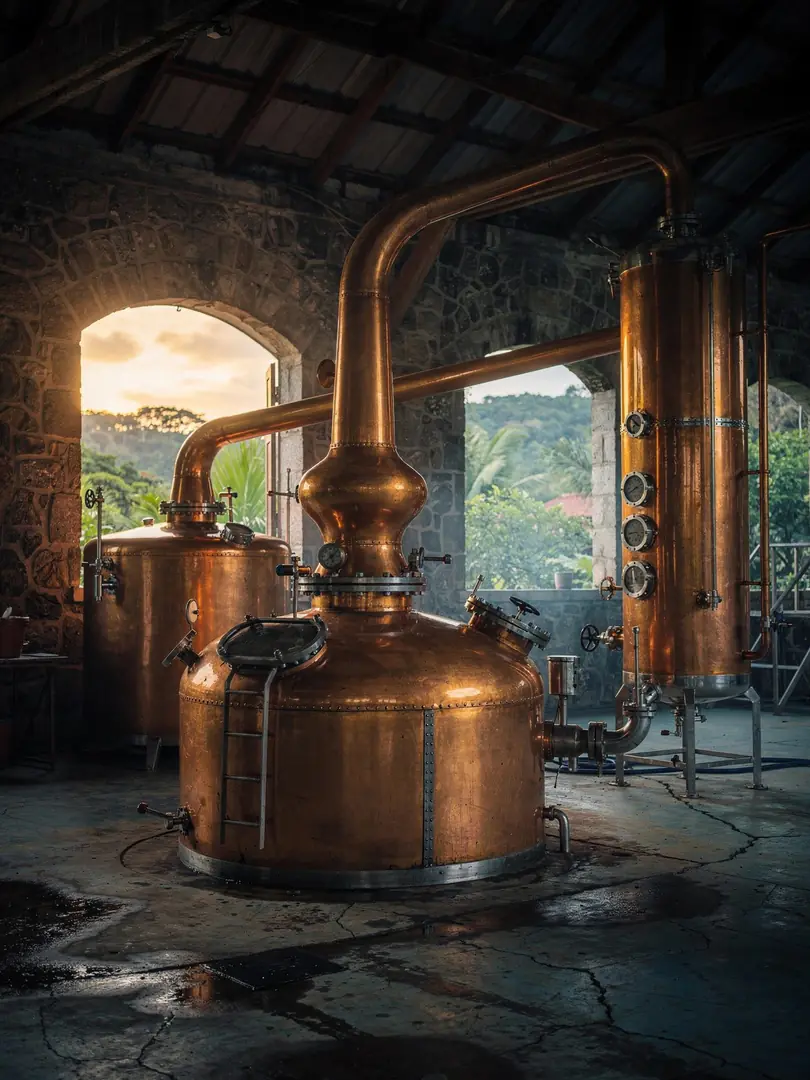
Pot and Column
Distillation
At Appleton, two distillation methods run side by side: the copper pot still and the column still. The house says the pot still distillate delivers the characteristic note of orange peel, while the column distillate provides balance. Only the blend of both creates the Appleton character.
A pot still is a copper kettle-shaped still. It's filled, heated and emptied, then the next batch begins. Copper binds sulphur compounds that would otherwise make the spirit smell unpleasant, while leaving robust aromas in the distillate. The result is spicy and full-bodied.
A column still, by contrast, runs without pause. The fermented wash enters at the top, steam rises, and across several plates the components separate by boiling point. The result is a lighter, cleaner distillate. Within the EU, rum may only be distilled below 96 percent alcohol, so that the character of the raw material is preserved.
The Jamaica geographical indication permits pot stills, column stills, and blends of both. Appleton uses both; according to the estate, the Rare Casks come exclusively from the estate's own pot and column rums. How much pot still and how much column still goes into a bottle is decided by Joy Spence and her team.
Asking about ester classes, as one might with Hampden or Long Pond, doesn't get you far with Appleton: the house names its rums by age and blend, not by code. This makes the labels readable even without deep knowledge of Jamaican rum, keeping the focus on what's actually in the glass.