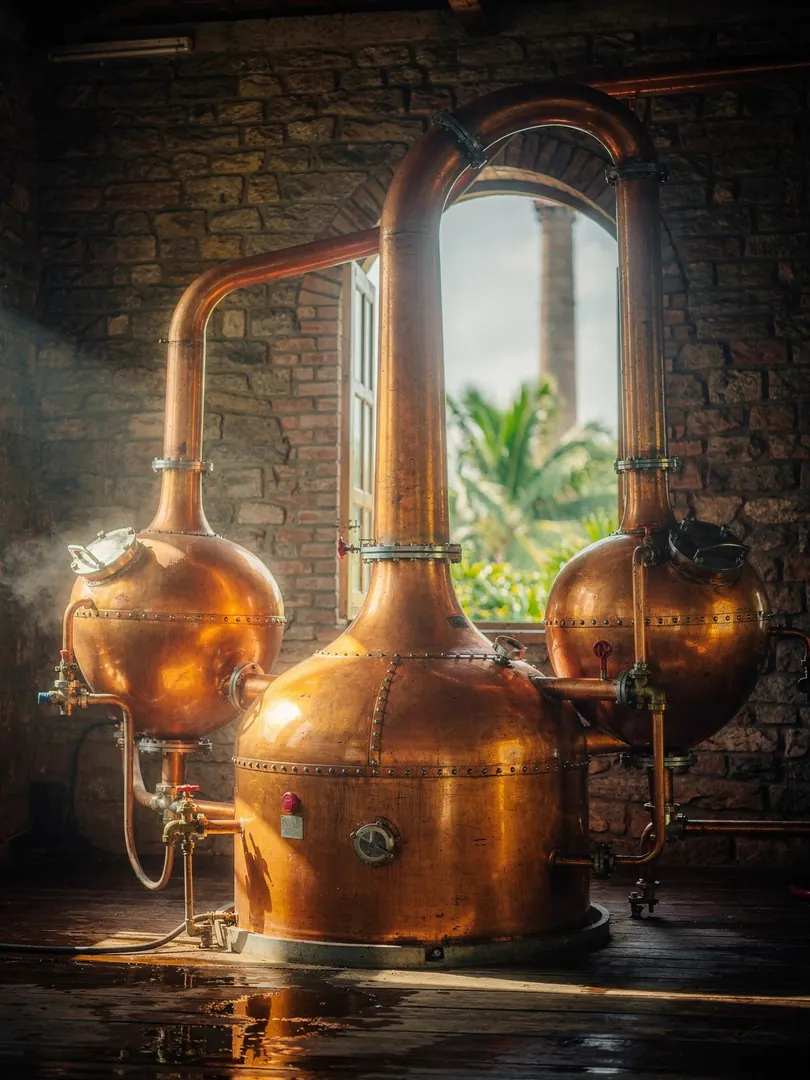
Copper, Retort, Marques
Distillation
Six copper pot stills with double retorts stand in Hampden's still house today. The oldest was built by John Dore in 1960, with several more coming from Forsyth in Scotland, one from Kentucky, and one from T&T Engineering in South Africa. A pot still is a kettle still that distils only one batch at a time.
The double retort makes the difference. Between the pot and the condenser hang two further vessels, in which the vapour is captured and re-vaporised once more. This lets the strength climb to high levels in a single run, and flavour compounds travel into the distillate almost undiluted. Long Pond is also known for its pot-still spirit.
The same stills produce rums of very different ester intensity. Hampden distinguishes them using codes called marques. OWH sits at 40 to 80 grams of esters per hectolitre of pure alcohol, HLCF at 400 to 600, and at the very top is DOK, at 1,500 to 1,600, the highest value permitted under Jamaica's export rules.
Rum Fire, unaged and bottled at 63 percent ABV, comes from the HLCF marque. The very highest classes, with ester levels of 700 to 1,600, are known in Jamaica as Continental Flavoured. These serve mainly as flavouring rum, blended with other rums in Europe or used in baked goods and confectionery.
Drinking rum usually sits far below those levels. The Jamaica designation of origin allows pot stills and column stills, as well as blends of both; Hampden sticks with the pot. More esters don't automatically mean better rum, they mean a different character.