Dunder, Muck, Funk
Fermentation
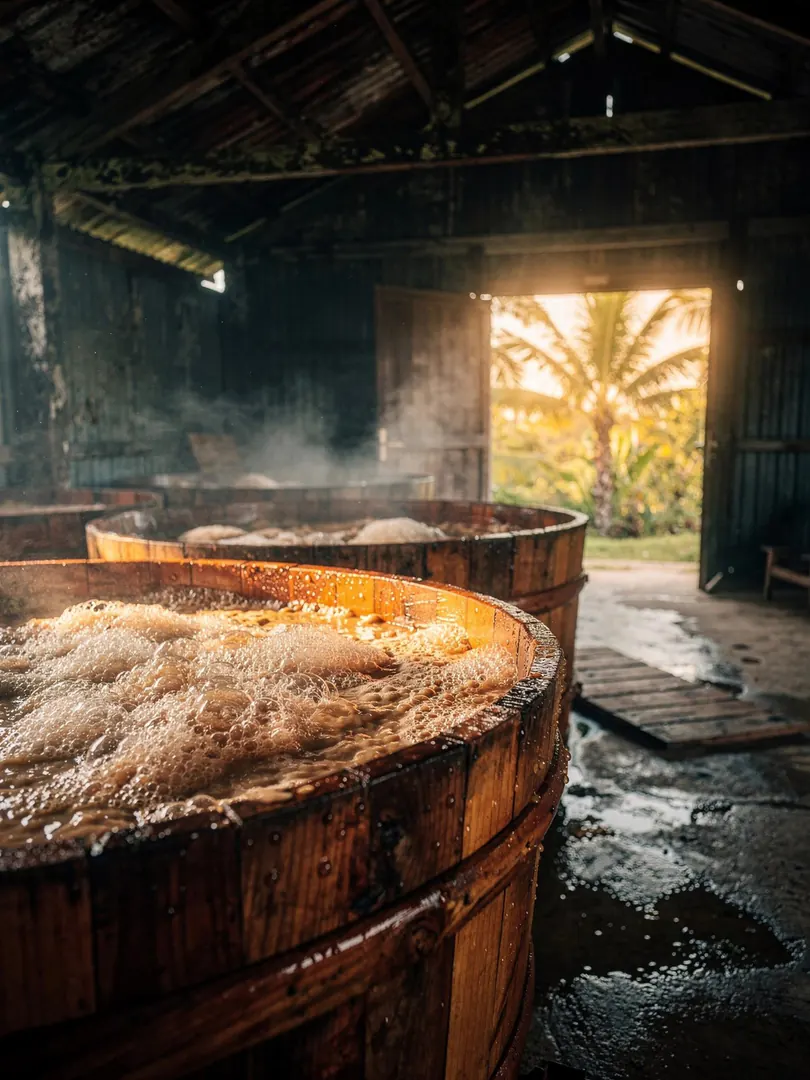
More than eighty open cedar-wood vats stand in the Hampden distillery. No cultured yeast goes in; fermentation is set off by yeasts that live in the valley and the building itself. The house attributes much of its rum's character to these wild yeasts.
How long does this fermentation take? For Hampden, eight to fifteen days are cited, though in the past it was usually nine to ten. That counts as very long for rum, giving bacteria and yeast time to form all manner of acids alongside the alcohol.
Dunder is the term for the stillage, the residue left in the pot after distillation. It gets reused, similar to the sour-mash method in whiskey production, and goes back into fermentation.
Muck is a bacteria-rich brew made from residues, stillage, and cane waste, set up in earthen pits. The pH is kept balanced with marl, a type of limestone-rich clay. Ripe fruit reportedly goes in too. Hampden blends eleven parts fermented molasses with seven parts of a mixture of cane juice, water, dunder, and muck.
Stories abound about carcasses in these pits, dead goats or bats. According to Hampden manager Vivian Wisdom, such tales were likely spread by competitors; it's a myth.
The acids from muck and dunder combine with alcohol during fermentation to form esters. These are compounds that smell of fruit and glue; they're measured in grams per hectolitre of pure alcohol. Long fermentation and plenty of muck produce what rum people call "funk": a bold, fruity, faintly rotten sweetness.