Sugar, Pits, Law
Region & History
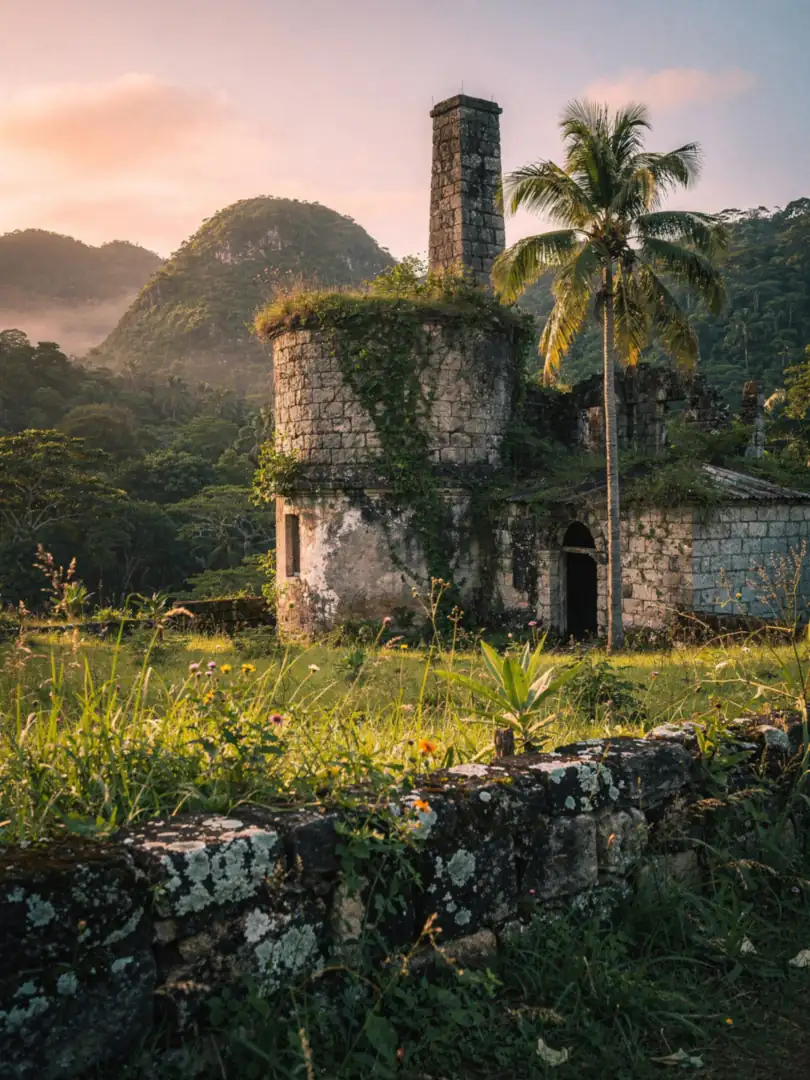
Jamaica's boldest rum comes from Trelawny, a parish in the northwest of the island. Behind the port of Falmouth, the land rises into Cockpit Country, a limestone landscape that from above looks like an upside-down egg carton. Between the hills lay the sugar estates, two of which still distil rum today: Hampden Estate and Long Pond.
British troops took Jamaica from the Spanish in 1655. By the 18th century, Trelawny had more sugar estates than any other parish, and Falmouth grew into a shipping port. The cane was grown and processed by enslaved people; compensation records after the end of slavery list 690 people for Hampden alone. The Maroons, who had retreated into the hills of Cockpit Country, secured a treaty in 1739 granting them freedom and land.
Sugar has been made at Hampden since 1753. The factory closed at the end of 2002, after which the estate fell into state hands. In 2009 the Hussey family took it over through their company Everglades Farms and has run the distillery ever since. Neighbouring Long Pond is said to be over 250 years old and belongs to National Rums of Jamaica, in which the state, Demerara Distillers of Guyana, and Maison Ferrand of France each hold a third. After a long shutdown, it was brought back online from 2016.
What qualifies as Jamaica rum? Since 2016, "Jamaica Rum" has been a geographical indication registered with the Jamaica Intellectual Property Office and administered by the Spirits Pool Association. It requires sugar cane as the raw material, whether as molasses, juice, or syrup, along with water and yeast. Distillation takes place in Jamaica, in pot stills, column stills, or a combination of both.
Ageing also happens on the island, in oak barrels of no more than 250 litres. After distillation, only water and sugar colouring may be added, so no sweetening is permitted. The minimum strength is 37.5 percent ABV. The name is not listed in the EU register, and its interpretation, particularly regarding column-distilled rum, has been publicly disputed since 2024.