Cane, Limestone, Molasses
Sugar Cane & Molasses
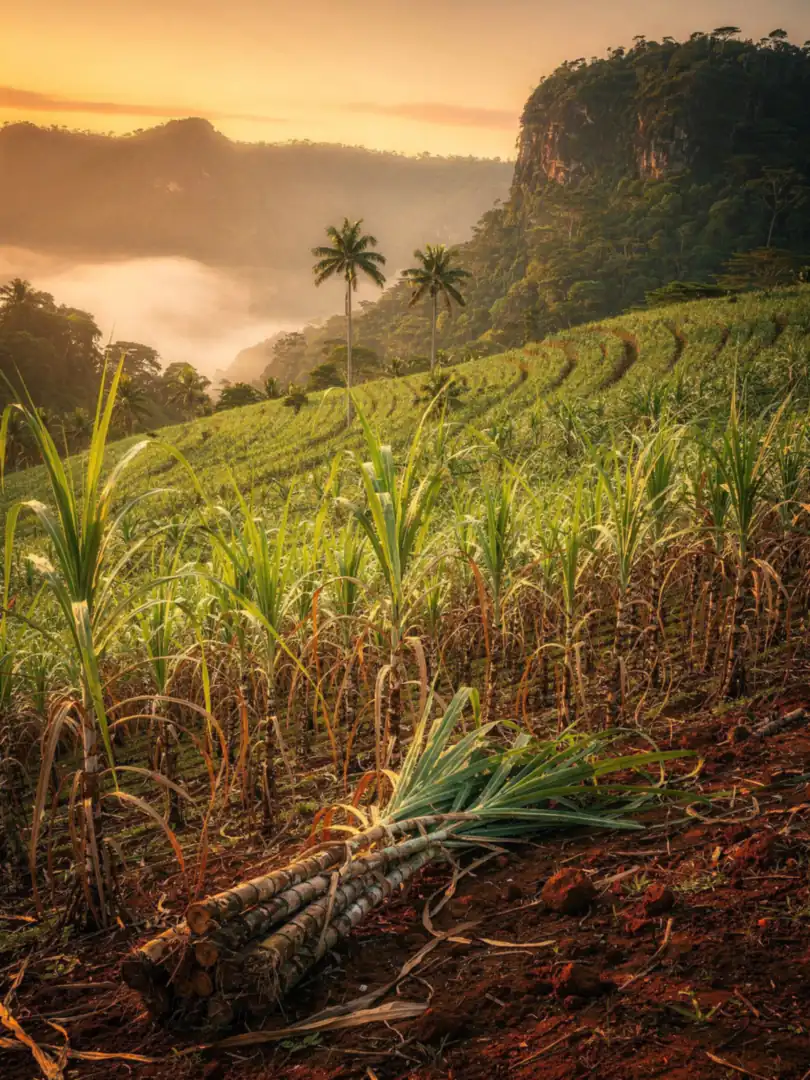
What raw material produces the rum of Hampden and Long Pond? Molasses, the dark, sticky residue left behind once sugar crystals have been separated from boiled-down cane juice. Molasses keeps and can be stored, whereas fresh juice spoils within hours or days and must be processed immediately.
The ground around both distilleries is limestone. Cockpit Country is a karst landscape of steep, forested hills and bowl-shaped depressions, the cockpits, where rainwater quickly disappears into the soil. Hampden sits in the Queen of Spain Valley in Trelawny. The sugar estates made use of the valleys and slopes where cane could be planted.
In the late 18th century, at the height of the sugar trade, most of the parish's great houses were built, including Hampden's own Great House in 1779. The wealth behind these houses rested on the labour of enslaved people. After the abolition of slavery and the loss of tariff advantages, the trade collapsed from the mid-19th century onward.
Hampden's sugar factory ceased operation at the end of 2002, but the distillery runs to this day. Cane juice, syrup, and molasses each lead to different styles of rum. Fresh juice produces rhum agricole, while syrup is thickened juice that can be processed year-round. Jamaica's rules permit all three raw materials, though in Trelawny molasses is the foundation of the heavy, full-flavoured rums.
What remains of the cane after pressing also plays into fermentation. The fibrous remains, the bagasse, reportedly end up in the estate's muck pits, feeding the bacterial brew that later shapes the flavour. So the cane continues to influence the rum long after the sugar has been processed elsewhere.