One Day
Fermentation
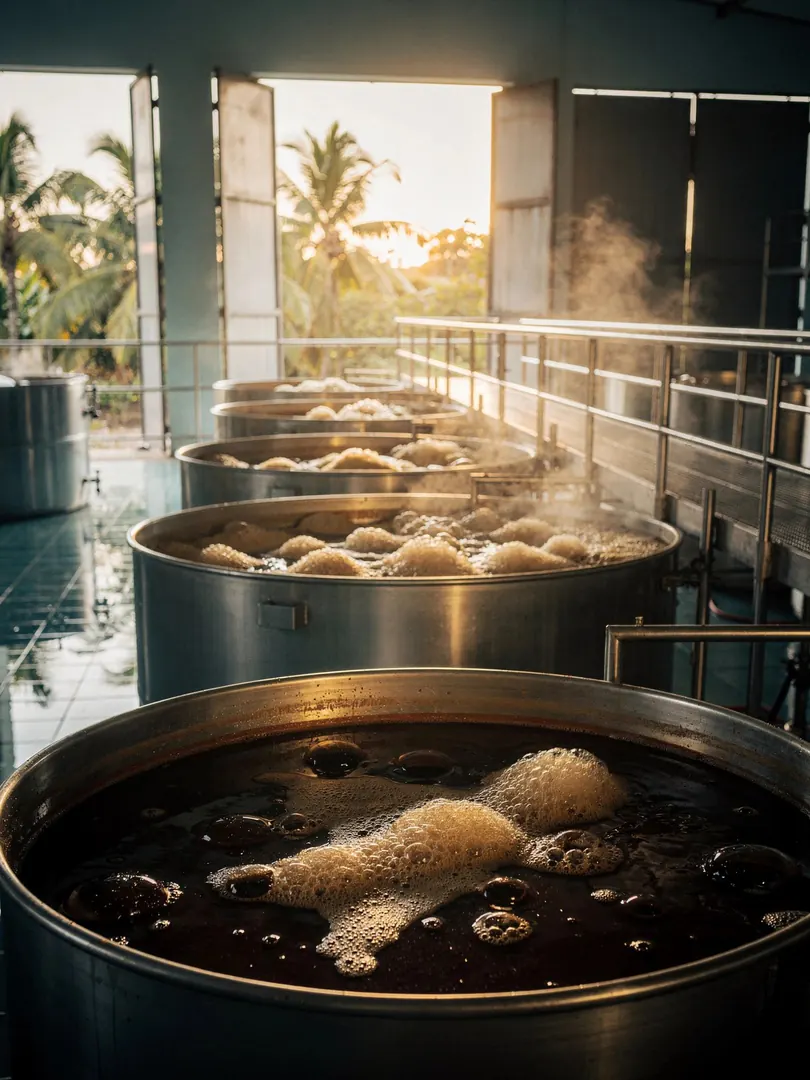
24 to 26 hours - that's how briefly the "Cuba" designation of origin allows the molasses to ferment. For rum, that's a very short span. Yeast turns the sugar in the diluted molasses into alcohol and carbon dioxide; the mash foams and warms up. After that, the batch is ready for distillation.
Keeping fermentation short shapes the style. Fruity aroma compounds, known as esters, form when acids and alcohol react with each other, and that takes time. Cuban distillers don't give it any. Their goal is a clean, light distillate without heavy fruit notes, which in the end becomes a pale, smooth rum.
A fermentation that yields so little aroma might look like a drawback, but it's deliberate. The lean distillate leaves plenty of room for the cask and the blend. The Maestros del Ron Cubano, Cuba's rum masters, build their rum step by step on this foundation, rather than drawing it out of a bold distillate.
The short process also has a practical advantage. A vat is free again after about a day, and the columns, which run without pause, get a steady supply. This suits the volumes involved: in 2024, according to industry figures, Havana Club sold around 3.3 million nine-liter cases.
What remains from the fermentation in the glass is little: a faint sweetness, a hint of fruit, nothing wild. Everything else comes later, with the column, the cask, and the blend. Anyone wanting to understand the taste of Cuban rum should look less for funk and punch than for balance.