From the Factory
Sugarcane & Molasses
Cuban rum is made from molasses, the dark, thick syrup left over at the sugar factory once the sugar has crystallized out. The "Cuba" designation of origin allows no other raw material and requires molasses from Cuban sugarcane. Freshly pressed cane juice, as used for rhum agricole, never makes it into the vat here.
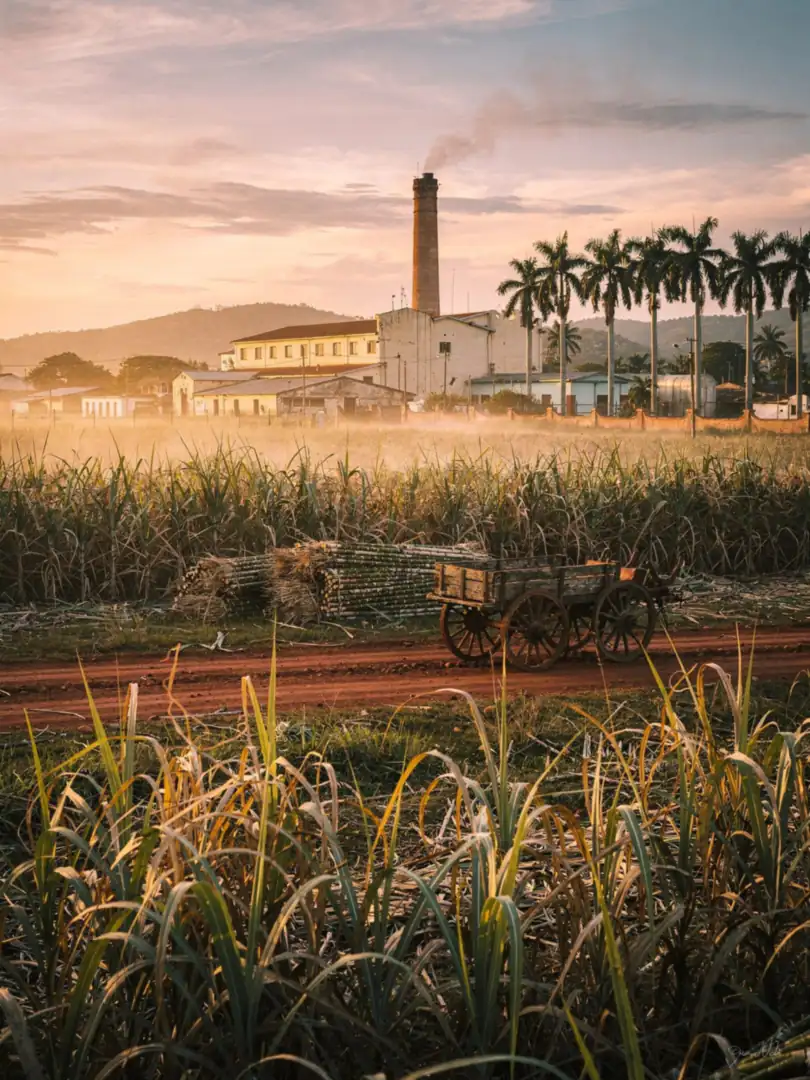
After the factory comes the field. Cuba's sugar harvest, the zafra, usually runs from November to May, during the drier half of the year. The cane is cut, hauled to the mill, and pressed; the juice is then boiled down until the sugar settles out. What the crystals leave behind is the molasses.
In the provinces of Mayabeque and Matanzas, between Havana and Varadero, there are sugar mills such as Boris Luis Santa Coloma and Héctor Molina in Mayabeque, and México and Mario Muñoz in Matanzas. The island's sugar industry has shrunk considerably. In poor harvest years, Cuban media have reported that several mills couldn't grind at all for lack of cane.
Molasses, cane juice, and syrup are three different starting materials. EU law allows all three for rum, as long as they come from cane sugar production. Molasses brings a dark, slightly toasted sweetness, while juice tastes fresh and grassy. Syrup is reduced cane juice and the third permitted raw material.
For Havana Club, this means the flavor isn't made in the field but later, through the interplay of fermentation, distillation, and cask. Sugar is present in the molasses only as a precursor to the alcohol. How much ends up in the finished rum is governed by the designation of origin. Sweetening is only permitted with Cuban cane sugar syrup, and at no more than 20 grams per liter.