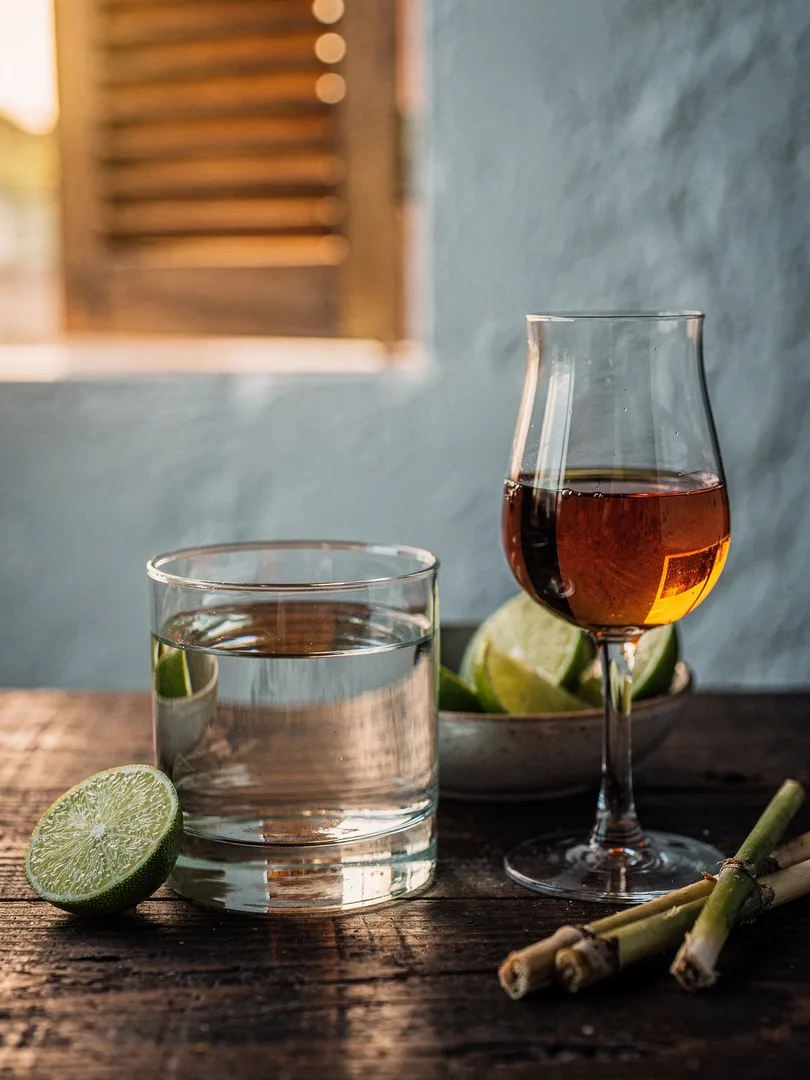
Carta Blanca, Añejo
Rum Style
The style that Santiago de Cuba has defined is called Carta Blanca: a pale, light rum made from molasses, distilled in a column still, and filtered through charcoal. In the company's history, Facundo Bacardí's 1862 rum is considered the world's first clear, light, mixable white rum. This is a producer's claim, but the style has set a precedent worldwide.
Pale doesn't mean young. Carta Blanca has undergone cask aging and is then decolorized, whereas an Añejo appears darker and has spent several years aging. The terms Añejo and Extra Añejo on a label are trade terms. A uniform standard exists only in certain countries, and the "Cuba" designation is meant to set minimum aging stages. This explains why two bottles bearing the same word can taste quite different.
What distinguishes this style from rum made in Jamaica or Martinique? Jamaica relies on pot stills and long fermentation, Martinique on fresh sugarcane juice. Cuba uses molasses, short fermentation, and column distillation, resulting in the calmest profile of the three: little fruit, little acidity, a hint of vanilla and caramel from the wood.
Experts speak of the Spanish style, or Ron ligero, the light rum. It is also common in Puerto Rico, the Dominican Republic, and Venezuela. With 19.7 million nine-liter cases sold in 2024, Bacardí ranks among the world's best-selling rum brands and held second place in the rankings. The style lives on in Cuba at the Ron Santiago de Cuba factory, while Bacardí itself today distills mainly in Puerto Rico.
Carta Blanca (Cuban light)Molasses · Column still
- Alcohol
- 37.5–40 % vol
- Cask ageing
- 1–3 Years
Pale, light, little fruit, a hint of vanilla and caramel, a soft, short finish.