Oak and Heat
Cask & Climate
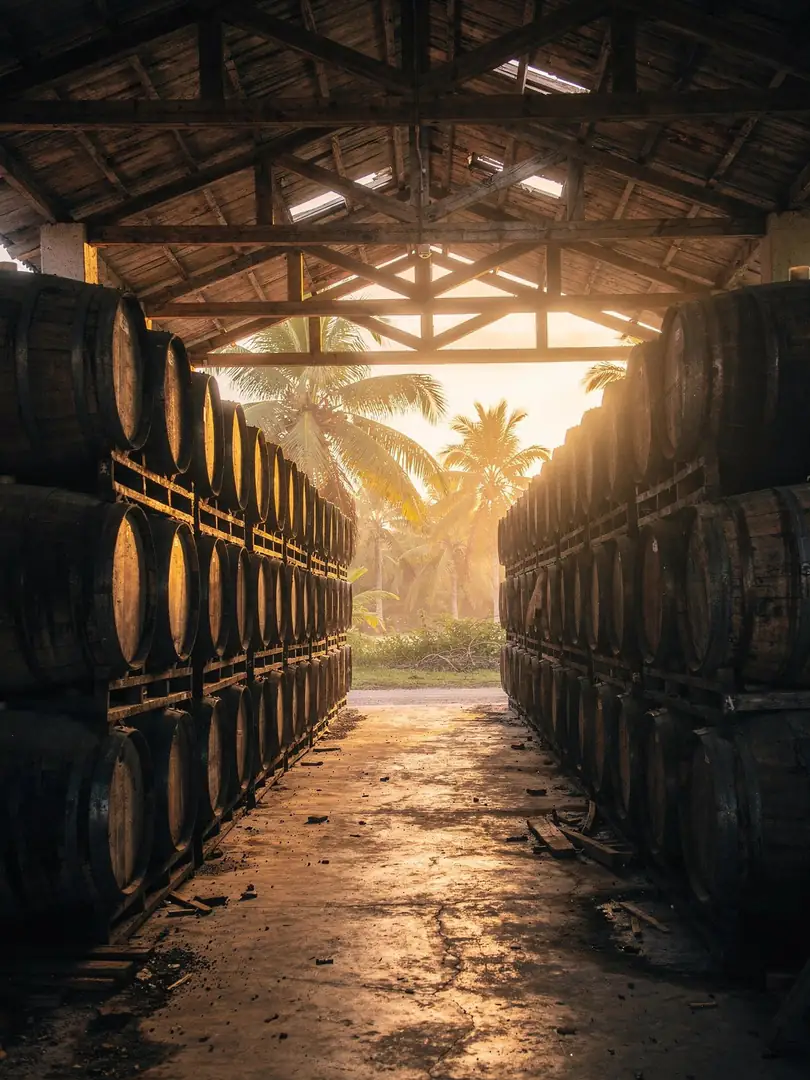
It's in the cask that the clear distillate truly becomes rum. Cuba ages its rum in used white oak barrels. The specification for the "Cuba" designation calls for 180 to 250 liters, up to 500 liters in exceptional cases, and requires that aging take place entirely within the country.
Santiago lies on the Caribbean coast, where the climate is warm and humid. The warmer it is, the faster the wood works and the more rum evaporates through the staves. In tropical warehouses, losses of around eight percent a year are common, compared to just a fraction of that in Scotland. This loss is known as the angel's share.
The specification requires at least two aging stages. The aguardiente ages on its own first, and later the blend continues to age; for an Extra Añejo, three stages are mandated. According to the house, the Extra Añejo 11 Años from Ron Santiago de Cuba is made from rums aged at least eleven years in various used white oak barrels. There is also a 25-year bottling.
Age statements are subject to a clear rule within the EU. The youngest component of the blend counts (Article 13 of Regulation 2019/787), and aging must take place under the tax supervision of a member state or an equivalent control system. An "11" on the label thus means no drop is younger than that. This is stricter than some solera figures, which state only the oldest component.
It's worth noting that a clear rum having spent time in a cask is perfectly normal. White rum can be aged, and the color is then removed again through activated charcoal filtration. According to the producer, Santiago de Cuba's Carta Blanca also spends a short time in cask.