Variety and Plot
Rum Style
In the center and south of Martinique, three styles matter. The Rhum blanc remains unaged and tastes most distinctly of cane. The élevé sous bois rests at least twelve months in wood, the vieux at least three years. Color reveals the maturity: crystal clear, golden-yellow to amber, and finally amber to mahogany.
All three styles are based on fresh sugarcane juice from the column. The difference from the Rhum de sucrerie of the Atlantic coast, made from syrup and molasses, is easy to spot in the glass: here the cane dominates, there the cooked sugar.
More than the raw material, it's the houses' approach that sets them apart. Clément belongs to GBH and operates on a larger scale, La Favorite is an independent family house with a steam engine, while La Mauny and Trois-Rivières fall under the BBS group umbrella. Distillerie Simon distills for both Clément and HSE, and yet they remain two distinct brands.
Sweetness comes from the cane, not from a sugar bowl. An unsweetened rum is the norm, and the AOC keeps so-called obscuration—coloring and additives—under 2% ABV. A Rhum agricole therefore tastes dry, even when it smells of sugarcane.
A love of naming conventions runs throughout: cane variety as with Canne Bleue, plot as with Plaisance, vintage as with Millésime. This opens a door for Rhum agricole that is otherwise familiar from wine. A rum should taste of its origin and of the year the cane grew.
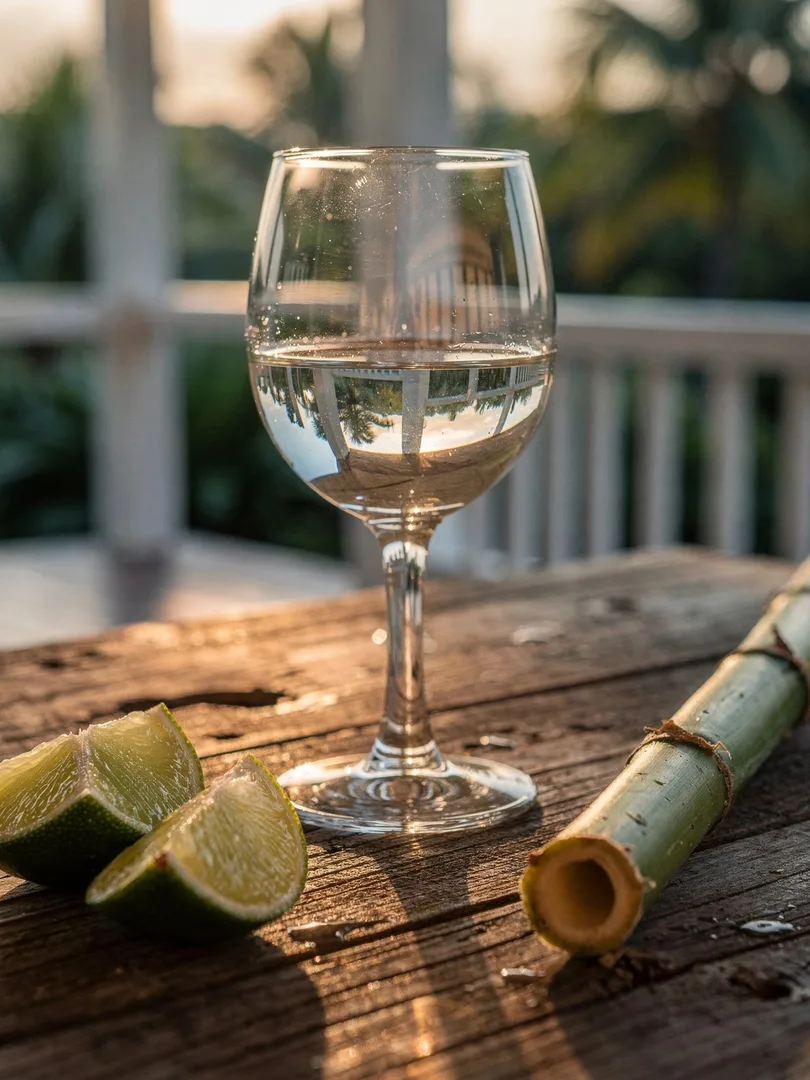
Rhum agricole blanc (Center and South)Cane juice · Column still
- Alcohol
- 40–55 % vol
- Cask ageing
- 0 Years
Freshly cut cane, green notes, pepper; unaged and clear, often single-variety.