Blanc versus Vieux
Tasting
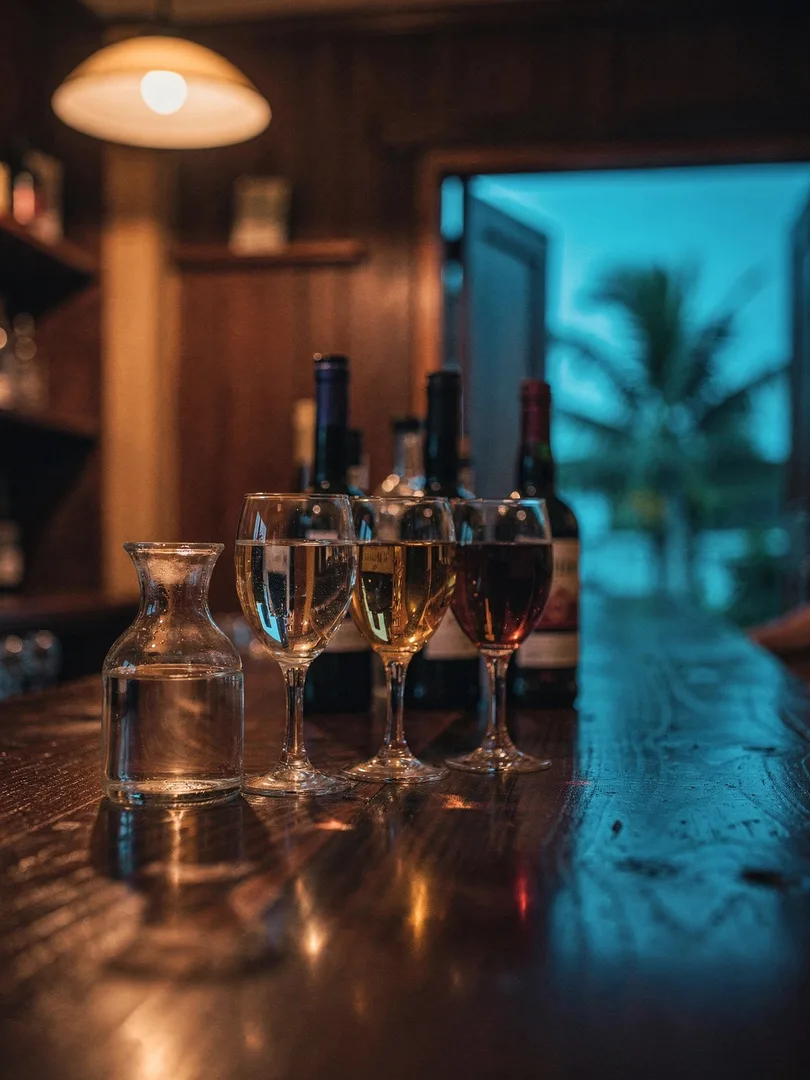
Three glasses side by side show what the region can do. A Clément Canne Bleue blanc at 50% ABV represents the large-scale house, a La Favorite Cœur de Canne blanc at 55% ABV represents the small, independent house, and a rum from La Mauny or Trois-Rivières rounds out the BBS group from Rivière-Pilote.
Start with the blanc and finish with the vieux, so wood and vanilla don't overwhelm the nose. A tulip-shaped nosing glass concentrates the aromas, and room temperature lets the cane and floral notes come through best. The gap between 50 and 55% ABV is noticeable: the stronger glass feels warmer and sharper on the nose.
A few drops of water suffice for the strong blanc, releasing the aromas and taking the edge off the alcohol. A Brut de Colonne like L'Initial at 71.4% ABV demands more caution and more water. Diluted this way, it reveals what the column delivers before the rum is brought down to drinking strength.
Three things are worth watching: the aroma before the first sip, the length of the finish, and the dryness. An Agricole finishes short and dry, a vieux longer with wood lingering in the aftertaste. Two centiliters per glass is enough.
A vieux like the La Favorite Millésime can be enjoyed neat. Wood, spice, and dried fruit come to the fore, while the cane remains as a dry undertone. Tasting a blanc and a vieux from the same house back to back quickly reveals just how much age and cask transform the juice.