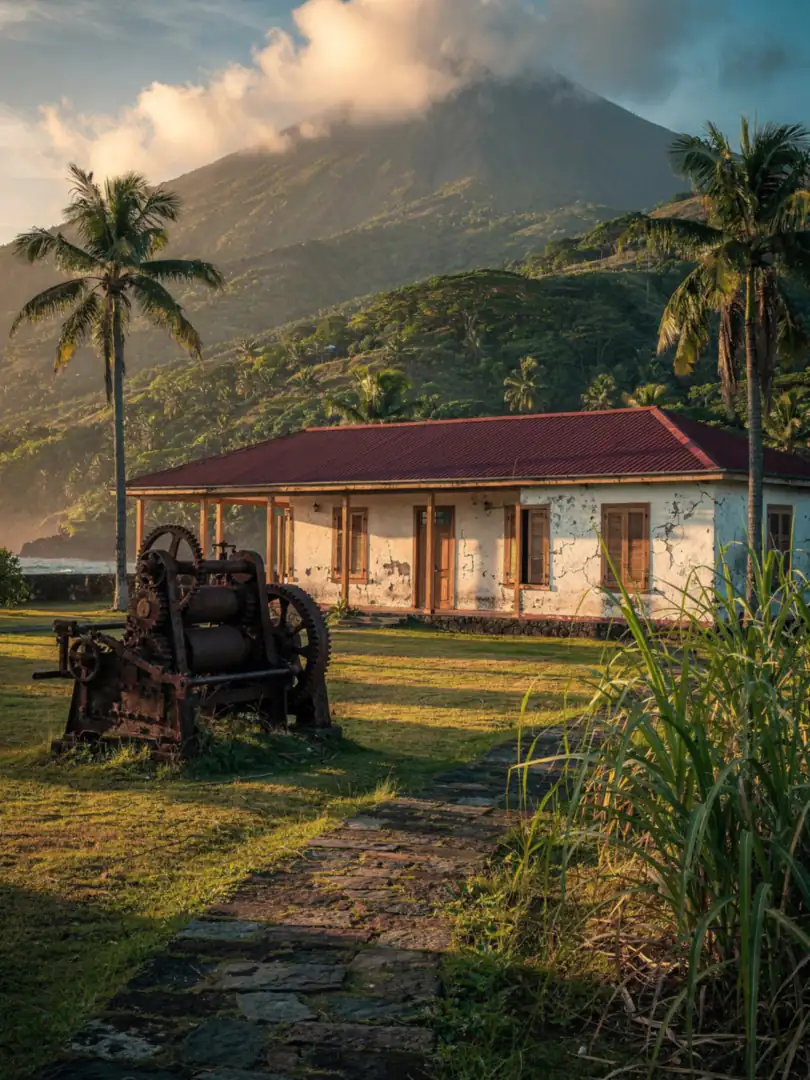
Mills by the sea
Region & History
Rhum agricole from Martinique is the only rum in the world with an AOC, a controlled designation of origin under French law. On the Atlantic coast in the northeast of the island, between Sainte-Marie, Macouba and La Trinité, three producers work that show just how far apart sugarcane rums can be: Saint-James, JM and the Le Galion sugar factory.
Sugarcane has been grown on Martinique since around 1640. It grew on plantations and was cut and processed by enslaved people who had been forcibly brought from Africa. Slavery did not end in the French colonies until 1848. By the end of the 19th century, the island was the world's largest rum producer, with over 220,000 hectoliters of rum at 55% ABV.
Saint-James traces its founding back to 1765. According to the house, Father Edmond Lefébure built a distillery above Saint-Pierre at that time. In 1973, Cointreau took over the house and consolidated production in Sainte-Marie; since 2003 it has belonged to La Martiniquaise, a group within COFEPP. In the manor house of the former sugar factory, a rum museum displays the technology of three centuries.
Further north, at the Habitation Fonds-Préville in Macouba on the slopes of Montagne Pelée, JM does its distilling. The house dates its rum distillery to 1845 and derives the name from the initials of founder Jean-Marie Martin. From 1914 the estate belonged to the Crassous de Médeuil family; since 2002 JM has been part of Groupe Bernard Hayot, known as GBH.
In 1922, France restricted imports of Antillean rum with a quota. In 1938 the first analytical definition of rum was created, setting a minimum content of aromatic compounds, which remains the basis to this day. The decree of 5 November 1996 recognized the AOC "Rhum de la Martinique"; at EU level the name has been protected as a geographical indication since 1989. The Bay of Le Galion has additionally had its own designation for molasses rum since 2008. In 2026, seven distilleries were active on the island.