Juice instead of molasses
Sugarcane & Molasses
How much sugarcane does an AOC Rhum agricole require? The specifications are strict: no more than 120 tons of cane per hectare may be harvested, means of accelerating ripening are forbidden, and every variety must have been acclimatized on the island for at least four years. Genetically modified varieties are excluded.
Harvesting runs from 1 January to 31 August. The dry season sets the pace, because during this campaign the mill runs, and only then is juice rum produced. Fresh sugarcane juice spoils within hours, which is why field, mill and distillery sit close together.
The mill presses the cane cold between horizontal rollers. The juice, called "vesou" on Martinique, must have at least 14 degrees Brix, the measure of dissolved sugar, and a pH of at least 4.7. Clarification is purely mechanical, without heating and without lime. Enhancing the juice with syrup or molasses is forbidden.
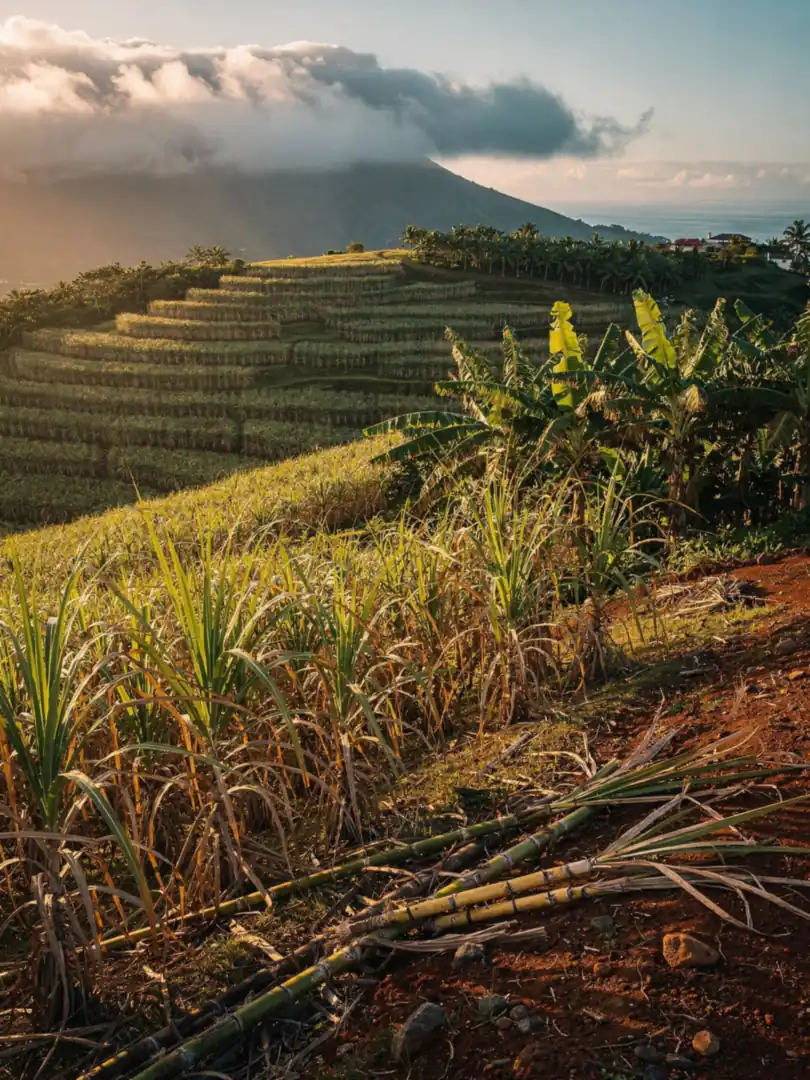
At JM, the cane grows, according to the house, exclusively on its own 225 hectares at Fonds-Préville, on the slopes of Montagne Pelée. On a tour of the grounds, bananas stand alongside the sugarcane. Sainte-Marie is still known for its bananas today, and a banana museum commemorates this.
Molasses is the dark, viscous residue left over from sugar production. In La Trinité stands the Le Galion sugar factory, and the bay's molasses rum comes from the molasses and syrup of this sugar production. The difference is easy to smell in the glass: fresh juice tastes of grass and freshly cut cane, cooked syrup of caramel and baked goods.